In North Macedonia, 52 new cases of HIV/AIDS have been reported from the start of the year through October 31, 2026. The number is already higher than the totals registered by November 27 in 2024 (51 cases) and in 2025 (38 cases), according to data from the Institute for Public Health.
Since registration began in 1987, a total of 781 cases have been recorded, of which 521 people are living with HIV, 146 have died and 114 are recorded as lost to follow-up.
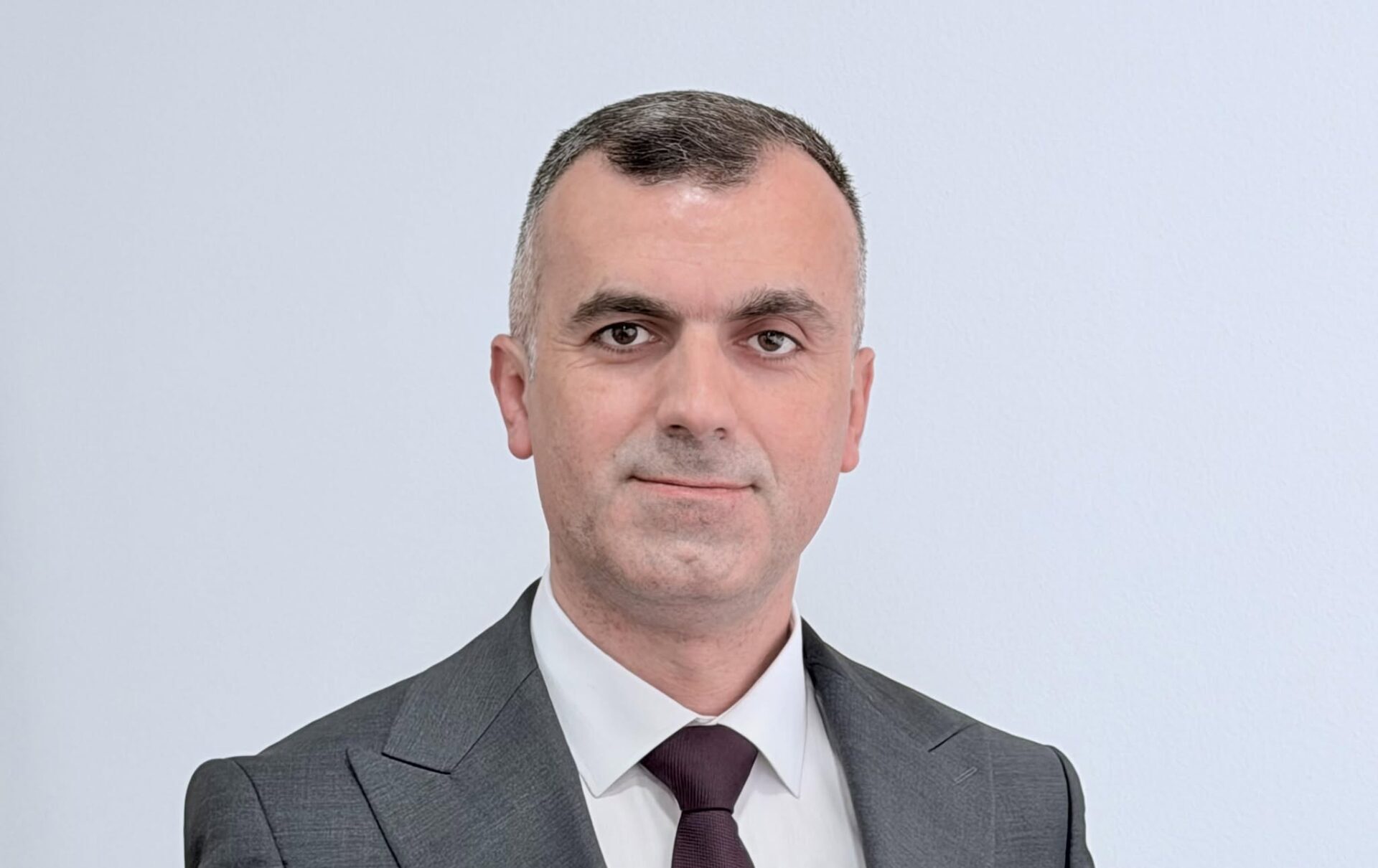
To understand the current state of the disease in the country, what the data show and what institutions are doing, Mollëkuqja spoke with infectious disease specialist Fadil Cana, who is also director of the University Clinic for Infectious Diseases and Febrile Conditions in Skopje.
Cana explains that North Macedonia is still considered a country with relatively low HIV prevalence. However, the new cases that keep being registered show that the infection remains a significant public health challenge.
“It should be stressed that the number of diagnosed cases does not necessarily reflect the real number of people living with HIV, since some of them may not be aware of their status,” says Cana.
For this reason, he says, institutions should focus on prevention, early detection and getting diagnosed people into treatment as quickly as possible.
How accessible is treatment for people living with HIV?
The University Clinic for Infectious Diseases and Febrile Conditions in Skopje is the central institution for the treatment and monitoring of people living with HIV in the country.
Cana says patients are offered antiretroviral therapy, specialized medical care and laboratory monitoring. Thanks to modern therapies, he explains, HIV has gone from an infection with a severe prognosis to a chronic condition that can be controlled successfully.
Asked about access to therapy and possible obstacles in treatment, he stresses the need for continuity of care and a stable supply of medicines.
“As an institution, our priority is ensuring continuity of treatment, equal access and maintaining the quality of health care. This requires a stable supply of medicines, planning for the long term and ongoing cooperation with the Ministry of Health and the responsible institutions,” says Cana.
He stresses that interruption of antiretroviral therapy should be avoided, since it can negatively affect control of the infection and increase the risk of developing drug resistance.
“Our goal is for every patient to receive safe, quality treatment in line with international standards,” says the infectious disease specialist.
How much are people being tested, and what are the gaps in the system?
When it comes to early detection, Cana believes the testing options offered by health institutions and civil society organizations should be expanded. In particular, he says, voluntary and confidential testing needs to be made more easily accessible.
“The main challenges remain stigma and fear of discrimination, insufficient information, as well as the need to strengthen prevention programs and identify infected people early. It is important that testing is integrated more broadly into everyday health practice, based on clinical indications and risk factors,” he stresses.
For Cana, the response to HIV requires medical care to go together with education, prevention and combating stigma.
“As an infectious disease doctor and director of the Clinic, I want to stress that early diagnosis and starting therapy on time make a long life of good quality possible. In addition, people who take therapy regularly and manage to keep an undetectable viral load do not transmit HIV through sexual contact, according to the scientifically proven principle U=U,” Cana explains.
The message from infectious disease specialist Fadil Cana is clear: today HIV is a condition that can be controlled, but only if it is detected in time. That requires more accessible testing, accurate information and less stigma, because, as he says, stigma and fear of discrimination remain the main challenges.
General information about HIV: what kind of infection is it?
HIV (Human Immunodeficiency Virus) is a virus that attacks the immune system, the body's natural defense against infections.
Without treatment, HIV can gradually weaken the immune system and lead to the development of AIDS (Acquired Immunodeficiency Syndrome). Today, thanks to modern antiretroviral therapy, people living with HIV can have long and healthy lives. Early detection and initiation of treatment are very important.
How is HIV (not) transmitted?
HIV can be transmitted through unprotected sexual contact with an infected person; contact with infected blood; sharing needles or other equipment among people who inject drugs; transmission from mother to child during pregnancy, childbirth, or breastfeeding if appropriate preventive measures are not taken.
HIV is NOT transmitted through shaking hands, hugging, or everyday contact; sharing eating utensils; coughing or sneezing; being in the same room with a person living with HIV.
What are the symptoms?
During the early stage, flu-like symptoms may occur: fever, fatigue, muscle aches, swollen lymph nodes, rash. The infection may then remain without symptoms for a long time.
How can it be prevented?
Prevention: condom use; regular HIV testing; use of sterile equipment during medical and other procedures; use of screened blood for transfusions; preventive and therapeutic measures according to healthcare professionals' recommendations.
Where can you get tested?
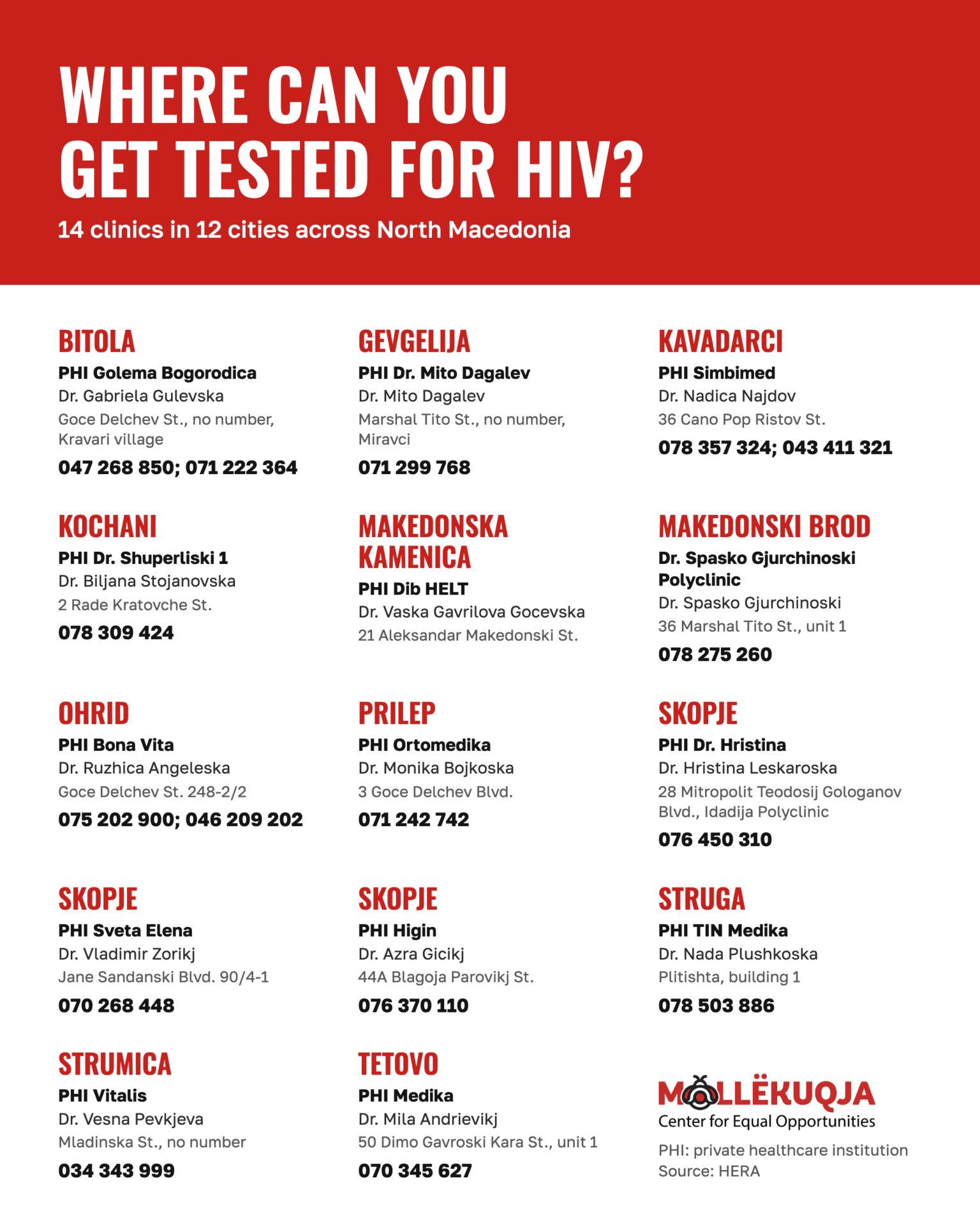
Public Health Centers in different cities across the country, including Skopje, Bitola, Kumanovo, Prilep, Kočani and Tetovo, offer voluntary HIV testing, in most cases free and anonymous. For information and directions to the center closest to where you live, you can contact the Institute for Public Health.
In addition to public institutions, there are also private health facilities in the country that offer HIV testing. Mollëkuqja presents some of them in the infographic below.
The message from infectious disease specialist Fadil Cana is clear: today HIV is a condition that can be controlled, but only if it is detected in time. That requires more accessible testing, accurate information and less stigma, because, as he says, stigma and fear of discrimination remain the main challenges. Testing at the Public Health Centers is in most cases free and anonymous. Anyone who takes therapy regularly and reaches an undetectable viral load does not transmit HIV through sexual contact.
Read these too:
- INTERVISTË | “Shumë as s’e dinë se i kanë”, infektologu Saveski flet për rastet me sëmundje seksualisht të transmetueshme në Maqedoni
- 765 HIV cases in Macedonia since 1987, what you need to know and where to get tested
This publication was produced within the framework of the project “Queer and Present: Media, Rights and Safety for LGBTIQ+ persons in Pollog”, implemented by the Center for Equal Opportunities “Mollëkuqja”. The project is implemented as part of the broader regional project “Together for LGBTQI+ Equality”, implemented by the Centre for Civic Education (CCE) in partnership with ERA – LGBTI Equal Rights Association for the Western Balkans and Turkey, Queer Montenegro, Queer Center Skopje, Tuzla Open Center, Open Mind Spectrum Albania (OMSA), and the Center for Social Group Development from Kosovo. The programme is funded by the European Union.

The contents of this publication are the sole responsibility of the Center for Equal Opportunities “Mollëkuqja” and do not necessarily reflect the views of the European Union, the Ministry of Regional Investment Development and Cooperation with Non-Governmental Organisations, CCE, or the project partners.