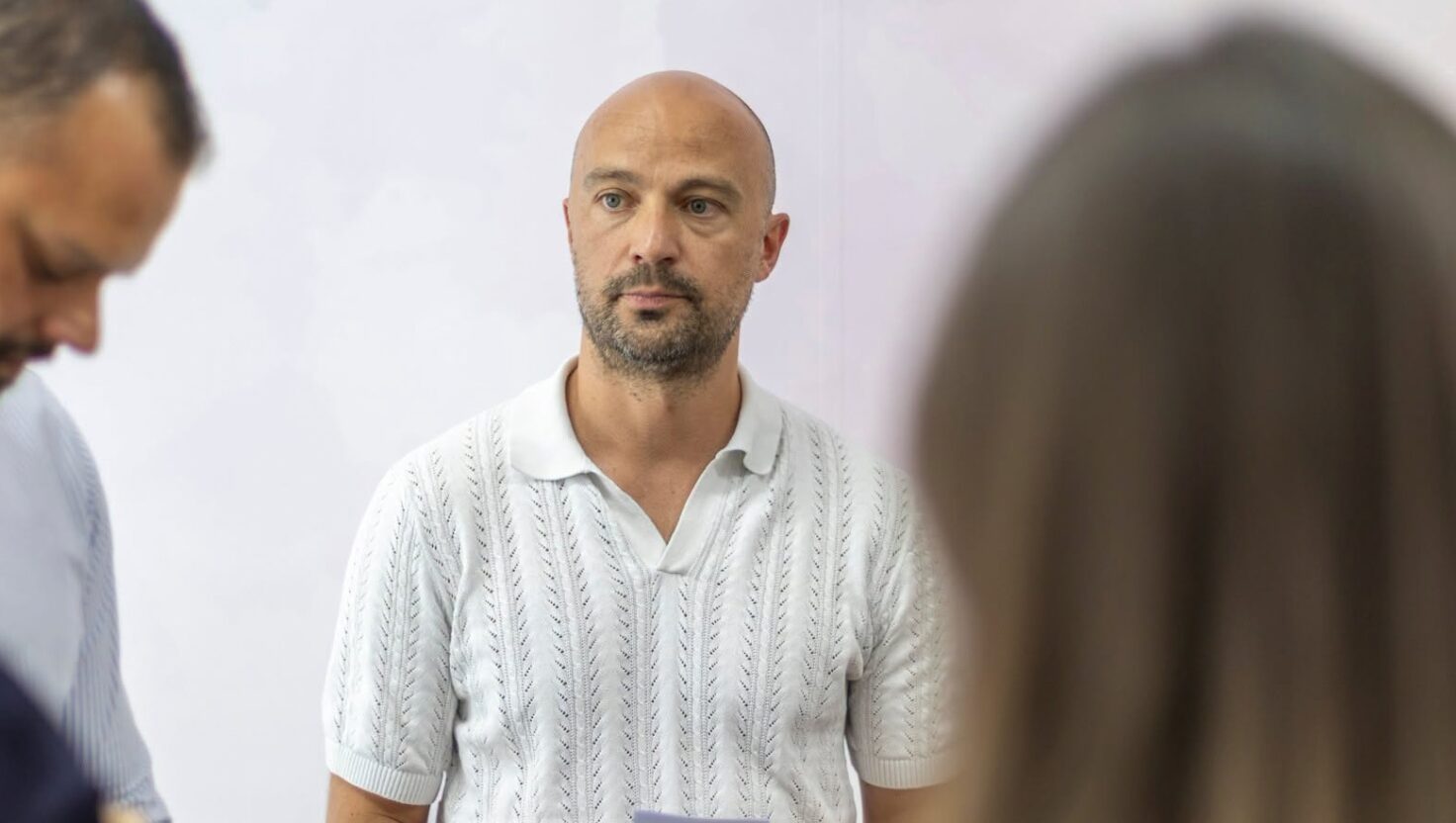
"We don't have time," says infectious disease specialist Velimir Saveski, warning that HIV cases in North Macedonia are rising fast. The country is still officially classified as having a low HIV prevalence, yet 32 percent of all cases recorded since 1987 have been diagnosed in just the last five years.
In August alone, 10 new cases of sexually transmitted diseases were reported (five gonorrhea, three chlamydia, two hepatitis B), along with five new HIV/AIDS cases. According to Saveski, these numbers don't reflect the real scale of the problem, since testing and reporting remain inadequate, while clinics are seeing more and more young patients.
In an interview with Mollëkuqja, he explains why many infections go unnoticed without symptoms, when testing should be done, and why a negative result doesn't always rule out infection. He also talks about the consequences of late diagnosis for HIV, syphilis, gonorrhea and chlamydia.
He also raised the issue of stigma and access to testing, especially outside Skopje, and called for more sex education, prevention efforts and normalized testing for HIV and other sexually transmitted diseases.
Which sexually transmitted infections (STIs) are most common, and which age groups are most affected?
More than 30 different bacteria, viruses and parasites are known to spread through sexual contact, including vaginal, anal and oral sex. Some STIs can also pass from mother to child during pregnancy, childbirth and breastfeeding.
Eight STIs are the most common worldwide. Four of them are currently curable: syphilis, gonorrhea, chlamydia and trichomoniasis. The other four are viral infections: hepatitis B, herpes simplex virus (HSV), HIV and human papillomavirus (HPV).
We see all of these infections in everyday practice. Naturally, the population most affected is the sexually active one.
According to data from the Institute of Public Health for August 2026, 10 people were registered with sexually and blood borne infections, excluding HIV/AIDS: five cases of gonorrhea, three of chlamydia and two of viral hepatitis B. That same month, five new HIV/AIDS cases were also reported.
The clearest age data we have is for HIV. According to cumulative HIV/AIDS data for Macedonia up to 27 November 2025, the average age at diagnosis was 34. The breakdown by age shows that sexually active people between 20 and 39 are the most affected, accounting for roughly three quarters of all diagnosed cases.
This data needs to be read carefully, because five reported cases of gonorrhea don't necessarily mean only five infections occurred across the whole country. With STIs, testing remains insufficient, and detection and reporting are far from complete.
The European Centre for Disease Prevention and Control (ECDC), in its assessment of North Macedonia's surveillance system, recommended analyzing this situation further and strengthening the system. In clinics, we're seeing more and more young patients with some form of STI.
Why do so many people have no symptoms, and when should they get tested?
Every day, worldwide, more than one million curable STIs occur among people aged 15 to 49, most of them without any symptoms.
In 2020, 374 million new infections were recorded among people aged 15 to 49 with one of the four curable STIs: chlamydia, gonorrhea, syphilis and trichomoniasis.
STIs are often asymptomatic. When symptoms do appear, they can be nonspecific and not indicate which infection is actually present. That's why specific diagnostic tests are used, although sometimes the clinical picture of an infection is so clear that treatment begins right away.
Every sexually active person should get tested. Recommendations differ for pregnant women and people living with HIV, but I would stress that patients shouldn't test themselves on their own initiative, because a negative test doesn't always rule out infection or disease. In other words, a negative result doesn't always mean the infection isn't there, because of what's known as the window period. Interpreting the result should be left to a trained healthcare professional.
How big a problem is late diagnosis, and what can happen if an STI goes untreated?
It depends on which infection we're talking about. Late detection is the biggest problem, especially with HIV.
With HIV, early diagnosis matters enormously, because it allows the infection to be caught and treated in time with modern antiretroviral therapy. That's how the infection gets brought under control and further transmission of HIV is prevented.
In general, STIs have a serious impact on sexual and reproductive health, but they can also cause serious consequences beyond the direct effect of the infection itself. For example, herpes, gonorrhea and syphilis infections can increase the risk of acquiring HIV.
Mother-to-child transmission of STIs can result in stillbirth, neonatal death, low birth weight, premature birth, sepsis, neonatal conjunctivitis and birth defects.
In 2022, 1.1 million deaths worldwide were linked to hepatitis B, mostly from cirrhosis and hepatocellular carcinoma.
Untreated chlamydia and gonorrhea, for instance, can cause pelvic inflammatory disease, infertility and ectopic pregnancy in women, and epididymitis in men. Untreated syphilis can, over time, damage the nervous and cardiovascular systems.
Infertility is of course one of the consequences. In the Republic of North Macedonia, fewer and fewer children are being born, while more and more people are struggling with infertility.
Do the HIV and syphilis numbers mean transmission is really increasing, or are we simply testing more?
A thorough analysis is needed. The number of diagnosed cases reflects both how widely the infection is actually spreading and how actively we're searching for, testing and reporting cases.
This is especially clear with syphilis. It's true that more cases are being reported, but that doesn't necessarily mean cases weren't being diagnosed and treated before.
North Macedonia continues to be classified as a low HIV prevalence country, but the Institute of Public Health points to a long-term upward trend: 32 percent of all HIV/AIDS cases recorded from 1987 through the end of November 2025 were registered in just the last five years.
Syphilis often goes unrecognized because of its wide range of clinical presentations. With HIV, more work needs to be done to break down the barriers, stigma and discrimination, as well as the mistrust in the system, that keep people away from testing.
Every sexually active person should get tested.
Where can people get tested, and what should they do if they suspect they've been infected?
See a doctor. If there's any concern or risk of an STI, including HIV, people shouldn't take antibiotics on their own initiative, or use creams or gels without medical advice.
There's an HIV counseling service at the Clinic for Infectious Diseases, as well as dermatovenerology services. Beyond the public health system, there are also HERA, Zaedno Posilni (Together Stronger) and EGAL.
These services are free, confidential and anonymous.
I would stress the importance of prevention, using a condom during every sexual encounter, and also using pre-exposure prophylaxis for HIV, or PrEP.
The greater the awareness of HIV and STIs, the greater the prevention.
Are institutions doing enough to inform the public and raise awareness?
More can and should always be done, and done better!
A lot has been done so far, but the situation with STIs and HIV remains worrying. Yes, programs and services exist, but there's considerable room to improve their coverage, continuity and accessibility.
A significant share of people living with HIV still don't know their status. Among young people, there's still not enough information about sexual and reproductive health.
What's needed is ongoing health education about HIV and STIs at every level of the health sector, normalizing testing, wider access to testing outside Skopje, better STI reporting and less stigma.
Testing for STIs and HIV should be seen as a normal part of taking care of your own health, while sex education should be treated as urgent, one of the best and most cost-effective preventive measures in the long run.
We don't have time. Institutions need to strongly back comprehensive sex education, and the fight against misinformation needs to be stepped up.
Where can you get tested?
Early testing remains the safest way to protect your health and that of your partners.
Centers for Public Health
Centers for Public Health in various cities across the country, including Skopje, Bitola, Kumanovo, Prilep, Kočani and Tetovo, offer voluntary HIV testing, in most cases free of charge and anonymous. For information and referral to the center nearest to where you live, you can contact the Institute for Public Health.
HERA, Youth Center "Sakam da znam" (I Want to Know)
Free and confidential testing for HIV and other sexually transmitted infections, with the option to book online as well. The physical service is located in Skopje, in Vodno.
HIV Center, run by "Zaedno Posilni" (Together Stronger)
Free testing every working day, no appointment needed. The only self-organized group of people living with HIV in the country, offering peer counseling.
- 7:30 to 13:00, every working day
- zp.mk
Early detection could save your life. If you've had risky contact or simply want peace of mind, don't hesitate to get tested. It is free, fast and, in most cases, anonymous.
General recommendations for preventing sexually transmitted infections
To reduce the risk of these infections, it is recommended to use condoms during sexual intercourse and to get tested regularly, especially for people with new or multiple sexual partners, as well as those who suspect they may have been exposed to an infection.
If symptoms appear, such as unusual discharge, burning during urination, pain in the genital area, or changes on the skin or mucous membranes, it is important to see a doctor as soon as possible. Antibiotics and other medications should not be taken without a doctor's recommendation.
Vaccination against HPV and hepatitis B remains one of the most effective preventive tools, while open communication with your partner and responsible sexual behavior remain just as important as physical protection itself.
This publication was produced within the framework of the project Queer and Present: Media, Rights and Safety for LGBTIQ+ persons in Pollog, which is implemented as part of the broader regional project Together for LGBTQI+ Equality, implemented by the Centre for Civic Education (CCE) in partnership with ERA – LGBTI Equal Rights Association for the Western Balkans and Turkey, Queer Montenegro, Queer Center Skopje, Tuzla Open Center, Open Mind Spectrum Albania (OMSA), and the Center for Social Group Development from Kosovo. The programme is funded by the European Union.