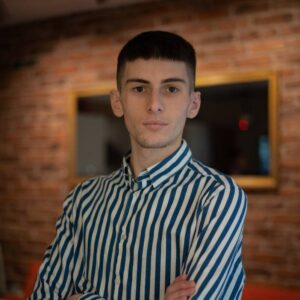
The media landscape in North Macedonia remains divided along linguistic and ethnic lines, and according to journalist Agnesa Çavolli, the way the media handle these differences often deepens the distance between communities. When we talk about other communities only in cases of conflict, incidents or political problems, she says, we unintentionally create the impression that the difference is the problem itself, while the everyday stories of people who live, work and face the same difficulties are left in the background.
The European Commission’s latest report on North Macedonia describes the interethnic situation as generally stable, but notes that debates over the implementation of language rights and the fair representation of minority communities keep coming back. It also states that the internet and social media have become the main platform for hate speech, with incidents registered in 2025 based most often, among other things, on ethnicity, while the Council of Media Ethics has received a record 244 complaints, mostly about content on internet portals.
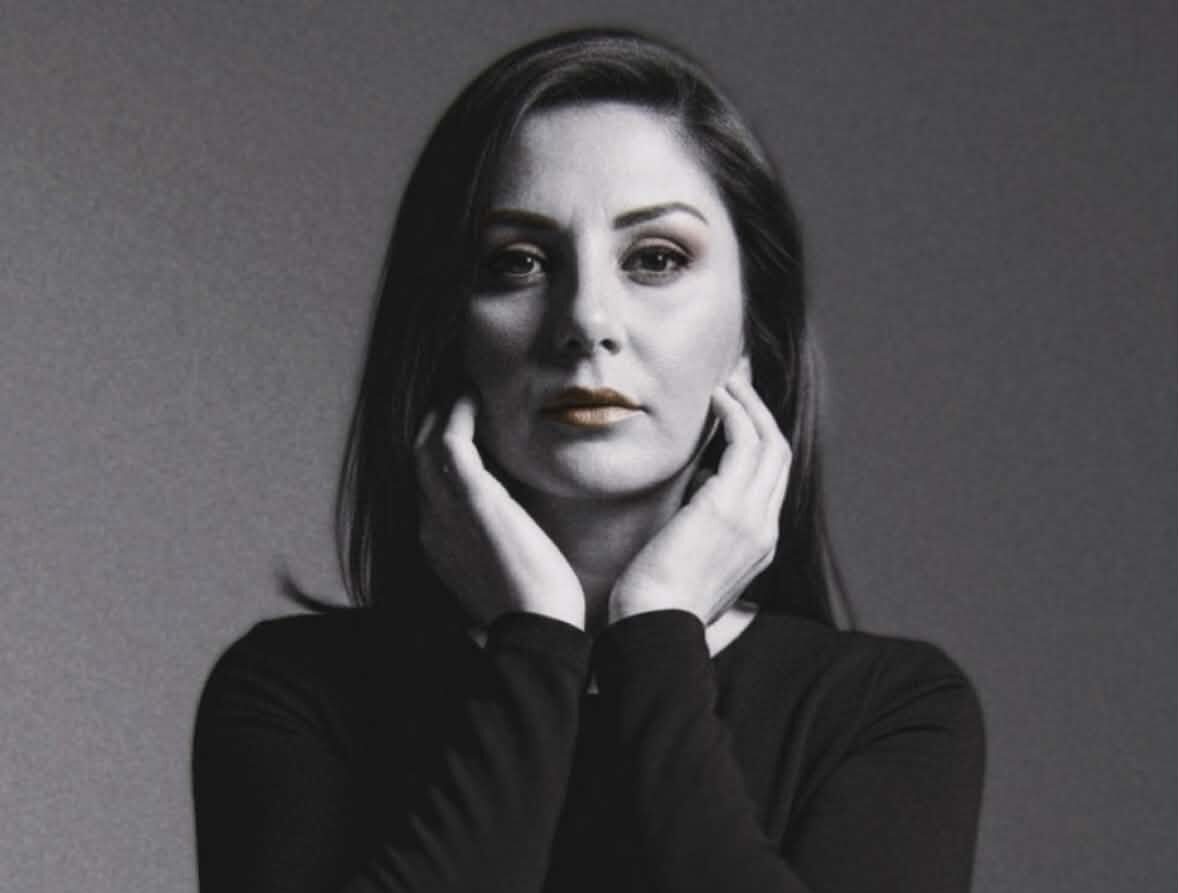
Çavolli knows this reality closely, from her professional experience in the media in the Albanian and Macedonian languages. Mollëkuqja spoke with her about the role of the media in interethnic relations, about how reporting can feed stereotypes, and about the need for more stories that are not tied to conflict. In her view, the media should start looking for what brings people together, not only what divides them.
How much do the media in North Macedonia contribute to building coexistence between ethnic communities, and how much do they still focus on the differences and conflicts between them?
I think the media can do much more. We often talk about different communities only when there is some conflict, incident or political problem. And so, without meaning to, we create the impression that the difference is the problem.
But there are plenty of things that bring us together, and we talk about them far less.
I have always worked and lived in both communities, in Albanian and Macedonian and so on, and for me that has never been anything special. It has been and is my life. That is why in my work I have always wanted to show people beyond the community they belong to.
I think the media are often too focused on politics, conflicts and differences. What interests me more is people: who they are, what they do, what they dream of, what scares them.
And that is exactly where I see far more coexistence than in politics.
Sometimes a photograph, an interview or a story about one person can do more to bring people closer than ten television debates.
In what ways can the media encourage, even unintentionally, negative narratives, stereotypes and ethnic divisions? Do you notice such examples, especially in reporting on young people?
Very easily. Sometimes a headline is enough to divide people. And most do it for clickbait or an agenda.
For example, if a person does something and we immediately stress which community they belong to, even when it has nothing to do with the event, the reader starts to link that action with an entire group.
And this is especially problematic with young people.
If a young person hears about the other community only when there is conflict, violence or politics, then naturally they form a certain image.
Do you think young people in North Macedonia get enough media content through which they learn about the lives, culture and problems of young people from other communities? What is missing?
No. I don’t think so. And that is a bit ironic, because young people today are perhaps more connected than ever through the internet, yet they can still live in two completely different realities.
We don’t always have to do a story about “coexistence.”
Sometimes it is enough to show two young people who have the same problem, listen to the same music, want to leave the country, look for work, fall in love, have problems with their parents…
When you see the other person as a human being and not only as a member of a community, it is much easier to understand them.
What can the media concretely do to move from simply reporting on ethnic divisions to actively promoting dialogue, mutual understanding and coexistence among young people?
I think we need to start looking for stories that are not about conflict, too.
As journalists, we often ask: “Where is the problem?” Perhaps we should also ask: “How can this work?”
We should do more interviews and reports in which young people from different communities speak together, not only when there is some problem. Do you keep that in mind? And above all, we should be careful with our language.
In the end, I don’t think the goal is to pretend we have no differences. We do… and that is totally okay. But the question is: will we use those differences to move away from each other, or to get to know each other better?
Çavolli’s call is not only for journalists. The European Commission’s report notes that the media industry in the country is highly fragmented and operates in a market with limited advertising revenue, which weakens sustainability and investment in quality content. Local and regional media, including nonprofit and community media, continue to face major financial challenges, while around half of journalists are paid below the national average wage. Stories that take time, fieldwork and work in more than one language need newsrooms with the resources to produce them.