Young people in North Macedonia grow up amid ethnic, cultural and social differences, but how often do those differences turn into barriers? In a society where politics keeps using ethnic issues to produce fear and division, young people often carry prejudice toward other communities without ever having had the chance to actually get to know them. These barriers don't weigh the same on everyone, young women often carry an extra layer of prejudice, tied not only to ethnicity but to gender as well.
Are the divides between young people real, or are they fed by politics and the system they grow up in? What role do schools, institutions and politics itself play in creating spaces where young people, regardless of ethnicity or gender, can get to know one another, work together and build trust?
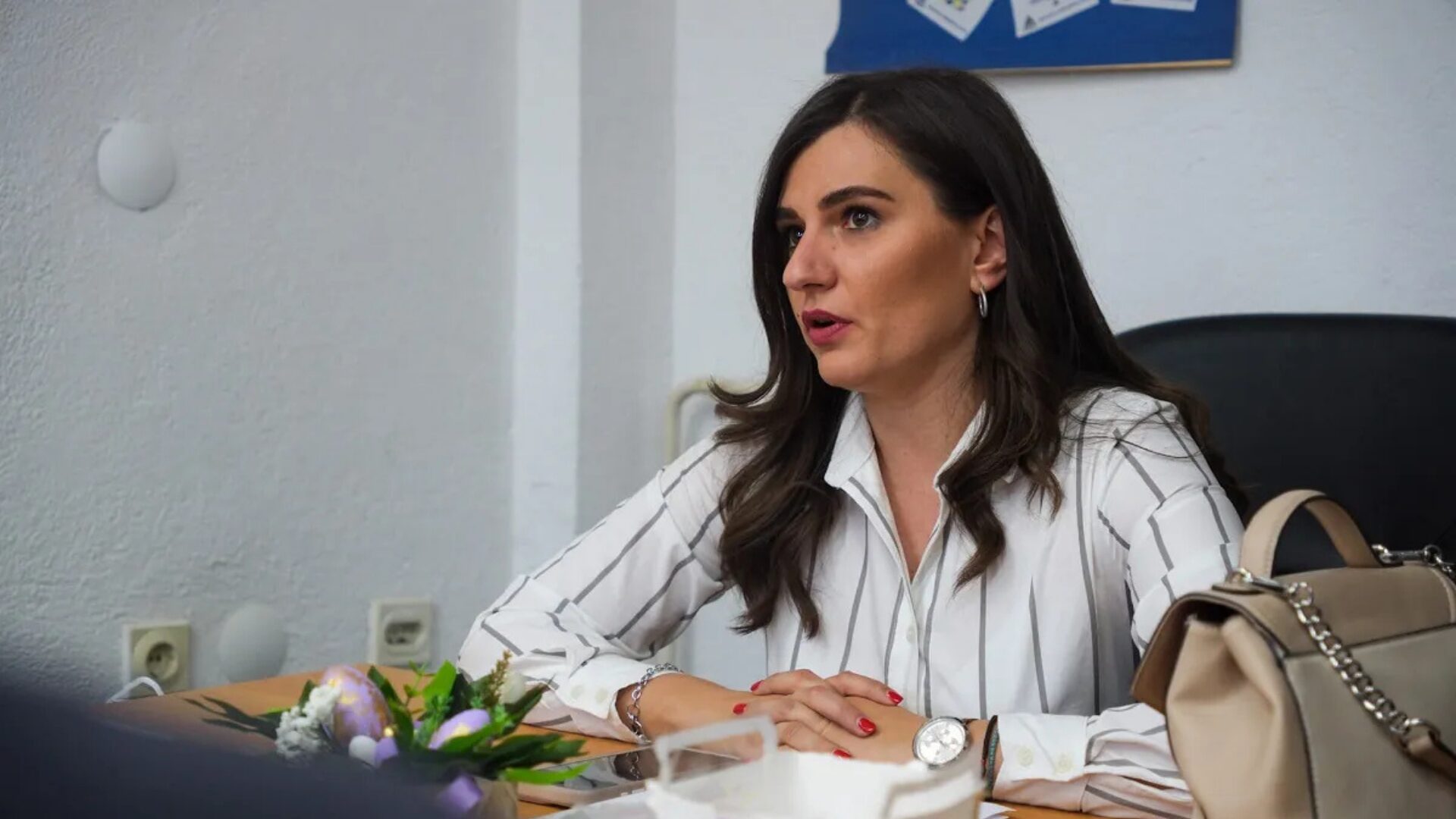
On these questions and others, Mollëkuqja spoke with Monika Zajkova, president of the Liberal Democratic Party and a member of parliament, one of the few women leading a political party in North Macedonia today. She says politics bears a heavy responsibility for creating divisive narratives, but stresses that young people have far more problems and interests in common than reasons to be divided.
How much do politics and "ethnic" propaganda shape young people, to the point where they start seeing one another as a "threat" without ever having met? How can that narrative be changed?
Politics bears a heavy responsibility, because in Macedonia ethnic issues have long been used as the cheapest political currency. When there are no results to show for a better standard of living, education, healthcare or functioning institutions, the easiest move is to point the finger at "the other" and manufacture fear. And the most dangerous part is when that fear gets passed down to young people who have never even met one another.
We're not born with prejudice, someone teaches it to us. And very often, it's politicians themselves who, through their own narrative, play the teacher. That's why we need to create more spaces where young people can study, work, play sport and create together, while politicians finally need to understand that they can't light ethnic fires during the day and then give speeches about coexistence at night.
Why does it matter that young people grow up open minded and without prejudice toward "others"? What does our society gain from that?
As a liberal democrat, to me a free person is someone who forms their own views, not someone who lives with the fears and prejudices that others have handed down to them. I want a Macedonia where a young person isn't judged by their first name, last name, ethnicity, religion, gender or social status, but by what kind of person they are, what they know and what they're capable of creating.
A young Macedonian doesn't take away the future of a young Albanian, Roma, Bosniak, Serb and so on, nor the other way around. On the contrary, together they can all create change and a better future. Because what actually robs them of their future is corruption, party patronage, poverty and a system that convinces people that without connections and a party membership card they stand no chance. Once we understand that, it becomes far harder for anyone to divide us in order to rule more easily.
Do you think young people today are more open to ethnic, cultural and social differences than previous generations, or do divisions still strongly shape the way they see one another?
I believe young people are more open than the political system they grow up in. They listen to the same music, travel, talk to each other on the same platforms, share the same career ambitions, and far more often recognize one another through shared interests than through ethnicity.
But the divisions are still real, especially where we, as a state, have practically built parallel worlds. If we separate children from the earliest age, we can't turn around at twenty and ask them why they don't trust one another. It's not enough for Macedonians, Albanians, Turks, Roma, Serbs, Vlachs, Bosniaks and everyone else to simply live next to one another. Coexistence means living with one another.
How much are institutions, schools and politics doing to give young people spaces where they can get to know one another, work together and learn to live with their differences? Where are we failing?
There are good initiatives, but systematically we're still doing far too little. Coexistence shouldn't be treated as a project that lasts only as long as the grant funding it, but as a long term state policy. From my years of work with young people, I've learned something very simple: sit them down at the same table, and you'll see they have far more problems in common than reasons to be divided. Whatever their name happens to be, they worry about student living costs, prices, public transport, the quality of education, jobs and uncertainty, and ultimately the question of whether they have any future here at all.
That's why we need joint school and student projects, youth centers, sport, culture, exchanges between municipalities and genuine youth participation in institutions. Coexistence isn't built with a discussion panel, a photo and a press release, while the rhetoric of division and false nationalism carries on elsewhere. It's built when young people actually have a reason to get to know each other and something to create together.
As a politician and member of parliament, what concretely needs to change for the new generation to grow up with less fear, prejudice and hatred toward "the other," and with more trust and solidarity?
First, politicians need to stop playing the ethnic card every time they have no results to show citizens.
Every citizen faces the same problems. There are no reagents in hospitals, no oncology treatment, court cases for ordinary citizens drag on for a lifetime while for the powerful they simply expire under the statute of limitations, and there's enormous spending on a pile of made up positions. They can't keep distracting us with issues from the past that are already out of context.
Second, education needs to bring us together, through shared activities, civic education, language learning, sport, culture and getting to know the different communities that make up Macedonia, our shared home.
Third, there needs to be a far more serious institutional response to hate speech and discrimination, especially on social media.
And finally, we need to give young people a future worth staying for, because poverty, injustice and a lack of hope are fertile ground for radicalization.
I don't want a Macedonia where politics counts us up and turns us against each other. I want a state that judges us by what we know, how hard we work and what we create. Patriotism isn't teaching your child who to hate. Patriotism is building a state that both your child and "the other's" child will want to stay in, will love just as much as their own, and will work together to help it grow.