This text contains a quoted homophobic slur.
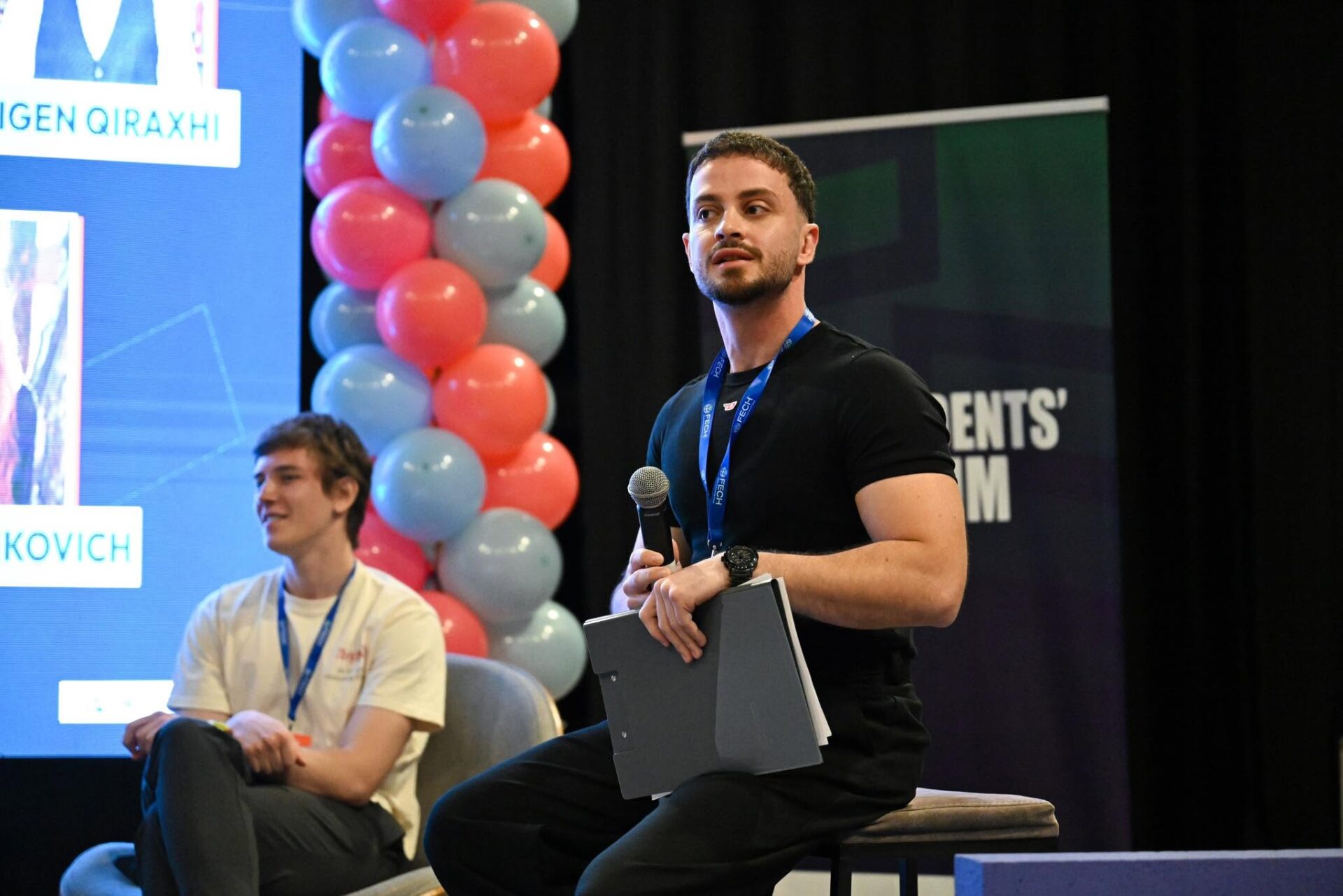
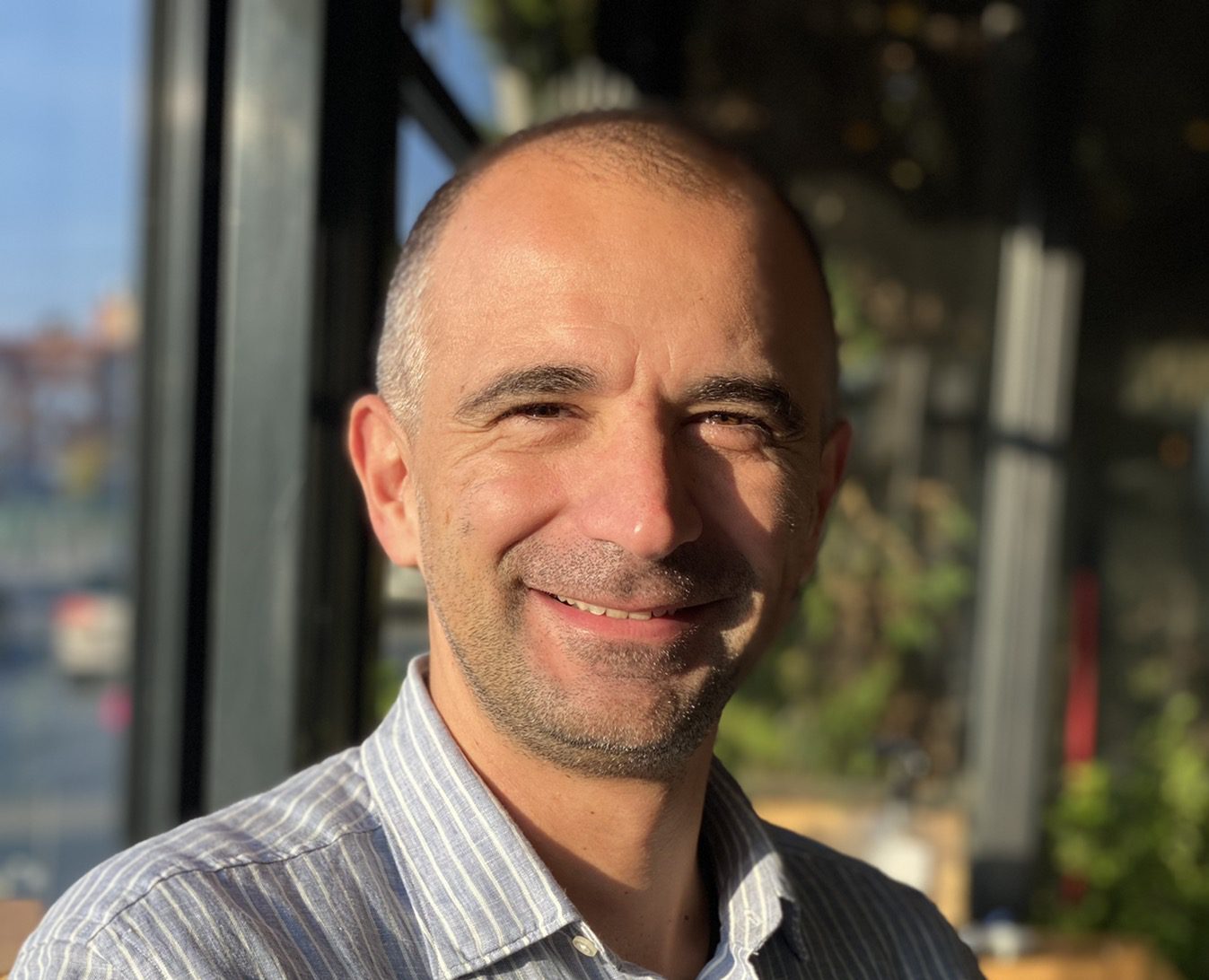
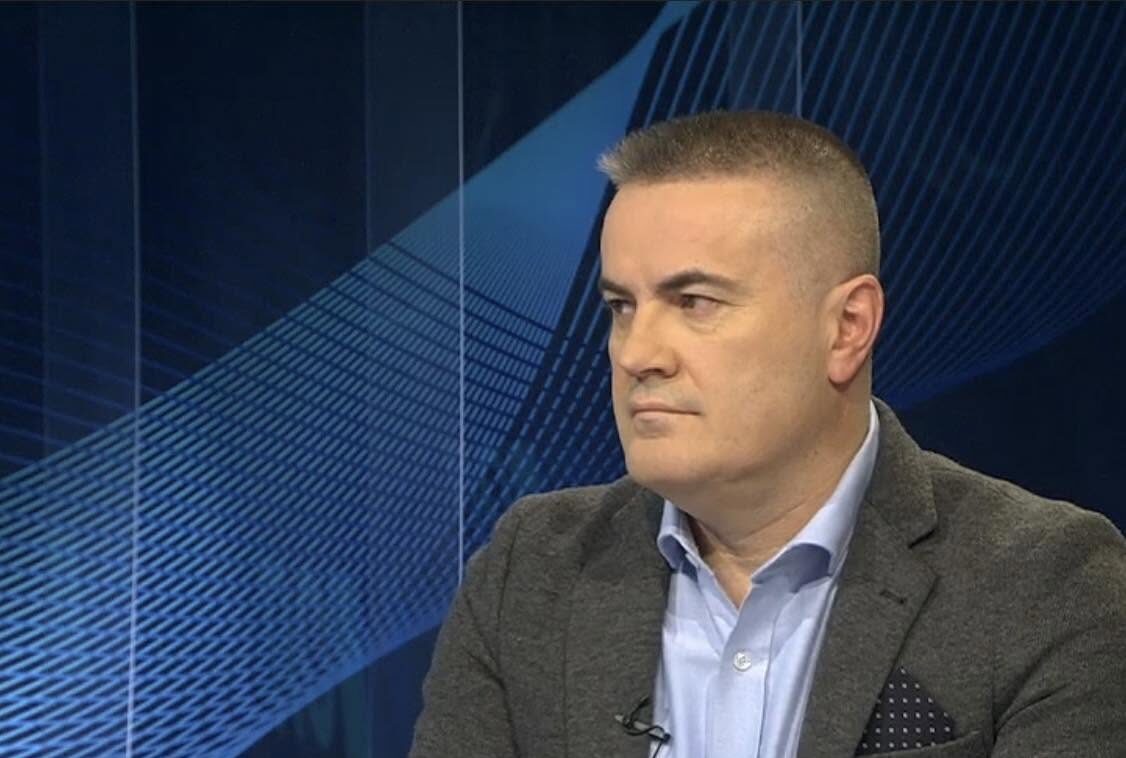
A few weeks ago, on TV Alfa, Petar Bogojeski told a female lawyer that a husband should supervise his wife. A week later, he called the women protesting femicide "hysterical bitches." He is the president of the Macedonian Concept party, which joined a coalition with VMRO-DPMNE before the elections and is regarded by civil society organizations as part of the ruling coalition. He is also an assistant professor at the Military Academy, where he teaches the army's future officers. On November 2, on the Kanal 5 show "Na kavga so Ivan," which was also published on YouTube, the word "peder," a slur for gay men, was used as a joke in a conversation with him.
This is not the first time. Criminal complaints for hate speech have been filed against Bogojeski. When he was appointed director of the national agency that manages Erasmus+, the Network for Protection against Discrimination asked for the nomination to be withdrawn, and the European Commission voiced concern over a possible conflict of interest and on ethical grounds. We are not talking about someone who made a mistake once.
For those of us who work on the rights of LGBTQI+ people, this word is not a small thing. According to Coalition Margins, nearly 37% of students report peer violence at their school because of sexual orientation or gender identity, and 63% of LGBTI students hide their identity. When someone in a position of power uses this word on television as a joke, those students get a clear message: the adults with power think this way, and no one cares. Coalition Margins has said that young people, whose rights and safety are already at risk, are the ones who pay the price.
Meanwhile, the state is doing the opposite of what would help. The Ministry of Education and Science has renamed comprehensive sexuality education "Health and Health Protection" and removed the word gender, along with the content on sexual diversity and homophobia. Margins calls this another blow to gender equality and LGBTI rights. So on one hand we are removing the word "homophobia" from schools, and on the other, a politician uses a homophobic slur on television.
And that is not all. On TV Alfa, on the show "Pod lupa," Bogojeski said that feminism had made women "behave in an inappropriate way and reject any form of male supervision." When lawyer Katerina Koteska asked who should supervise her, he answered that her husband should, because it is his "duty" and "obligation." On infidelity, he said a husband's reaction is not violence but the defense of his dignity.
Saying that a man has the right, even the duty, to keep his wife under control is not an opinion. It is patriarchy and misogyny. Women are not the property of their partners. Not marriage, not infidelity, not "traditional values" can justify control, humiliation, or violence.
This can set off a chain of harm. An abuser who hears a professor say this on television takes it as confirmation. A woman facing violence at home may think it is not worth speaking up. Boys who no longer learn anything about gender and power at school may hear this as the only answer they get. This is not a personal opinion. It is the stance of a party leader whose party is part of the ruling coalition. The question is not only what he thinks, but what is tolerated by those who have him in their coalition.
We are not saying Bogojeski is Andrew Tate, but the formula is familiar: antifeminism packaged as "the truth nobody dares to say," mockery of critics, manhood as domination. Studies show this has consequences. A 2024 study of young men in Sweden found that those who follow more "manfluencers" are more likely to hold dehumanizing views of women. An American study found that teenage boys who follow manosphere figures believe more strongly in a rigid idea of manhood, even after accounting for the messages they hear at home. In Australia, interviews with 30 women teachers showed that Tate's content was changing the way boys treat women.
To the media
Researcher Whitney Phillips, in her report "The Oxygen of Amplification," shows that journalists who covered extremists, even while simply doing their jobs, ended up serving the extremists' interests. One journalist summed it up: "At a certain point you have to realize you're promoting them."
We are not calling for censorship, and we are not accusing journalists. AVMU found that the TV Alfa journalist acted professionally and challenged his claims in the studio, and that deserves to be said. But when the same person is invited again and again, the decision is no longer the journalist's in the studio. It belongs to the editorial desk. Someone who has his own profile and his own audience does not need us to hand him a microphone as well. When a headline or reel repeats the offensive word, he does not get an answer. He gets views. That is why we call on newsrooms to stop inviting, again and again, someone who has shown that he spreads this kind of language. Do not play it for laughs in pursuit of sensation. Do not treat it as a minor provocation or a television spectacle. Clicks are not more important than people.
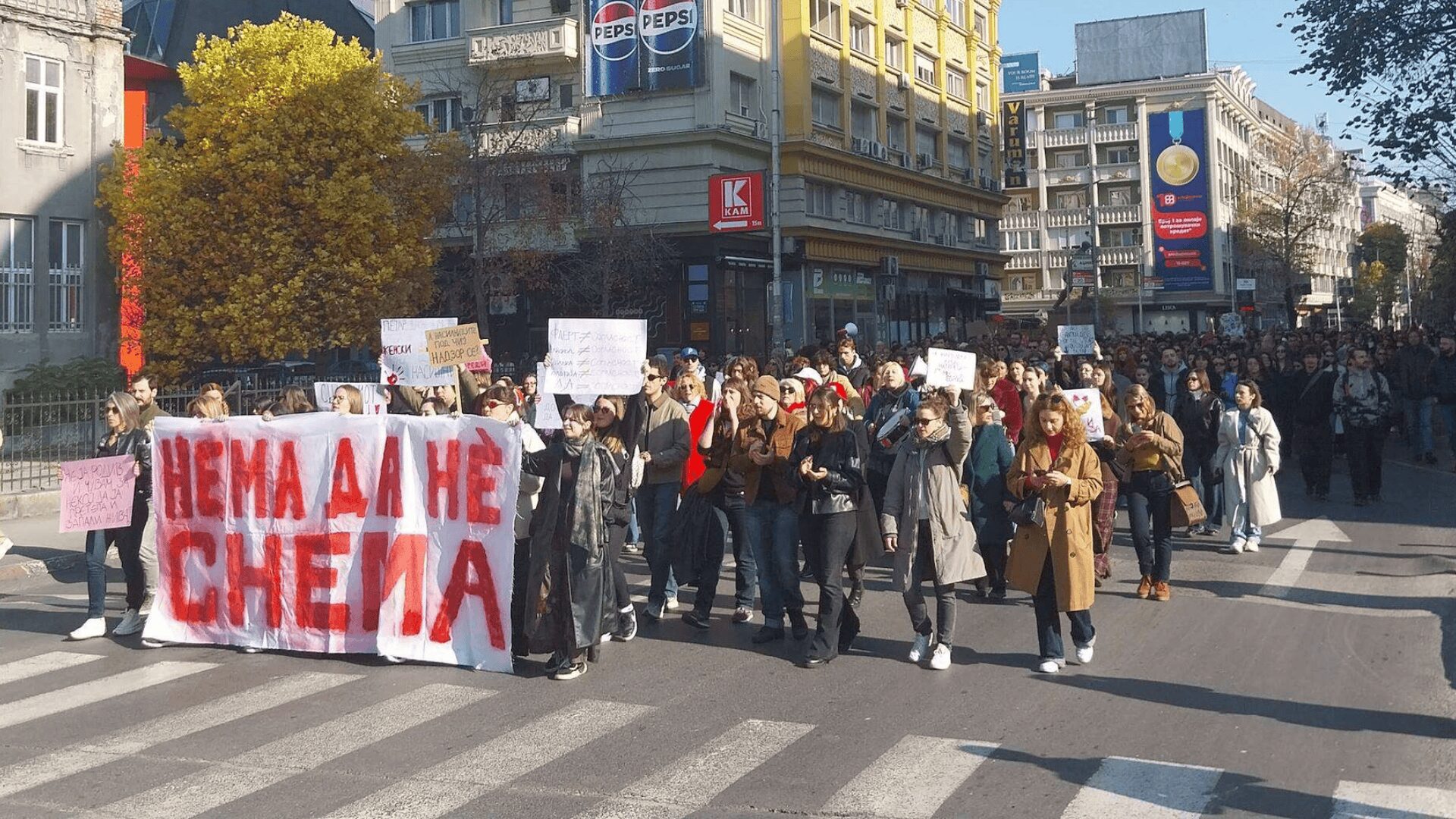
And the timing is no coincidence. According to the Platform for Gender Equality, Eurostat ranked North Macedonia third in Europe for its femicide rate (2023), and the National Network to End Violence against Women and Domestic Violence recorded 7 women murdered and 2 attempted murders in the first nine months of 2026. On November 8, citizens took to the streets in Skopje for the "Not One More" protest, against femicide, institutional violence, and impunity. And right now, someone with a title and a party says women need "supervision."
This article comes in response to a report that reached Mollëkuqja from a reader through the platform "Report the Homophobia of Officials" at mollekuqja.mk.
This publication was produced within the framework of the project “Queer and Present: Media, Rights and Safety for LGBTIQ+ persons in Pollog”, implemented by the Center for Equal Opportunities “Mollëkuqja”. The project is implemented as part of the broader regional project “Together for LGBTQI+ Equality”, implemented by the Centre for Civic Education (CCE) in partnership with ERA – LGBTI Equal Rights Association for the Western Balkans and Turkey, Queer Montenegro, Queer Center Skopje, Tuzla Open Center, Open Mind Spectrum Albania (OMSA), and the Center for Social Group Development from Kosovo. The programme is funded by the European Union.