The challenges facing LGBT+ people in the Western Balkans remain among the most complex human rights issues in the region, and they are often so similar from one country to another that it feels like talking about the same everyday reality, repeated under different state names.
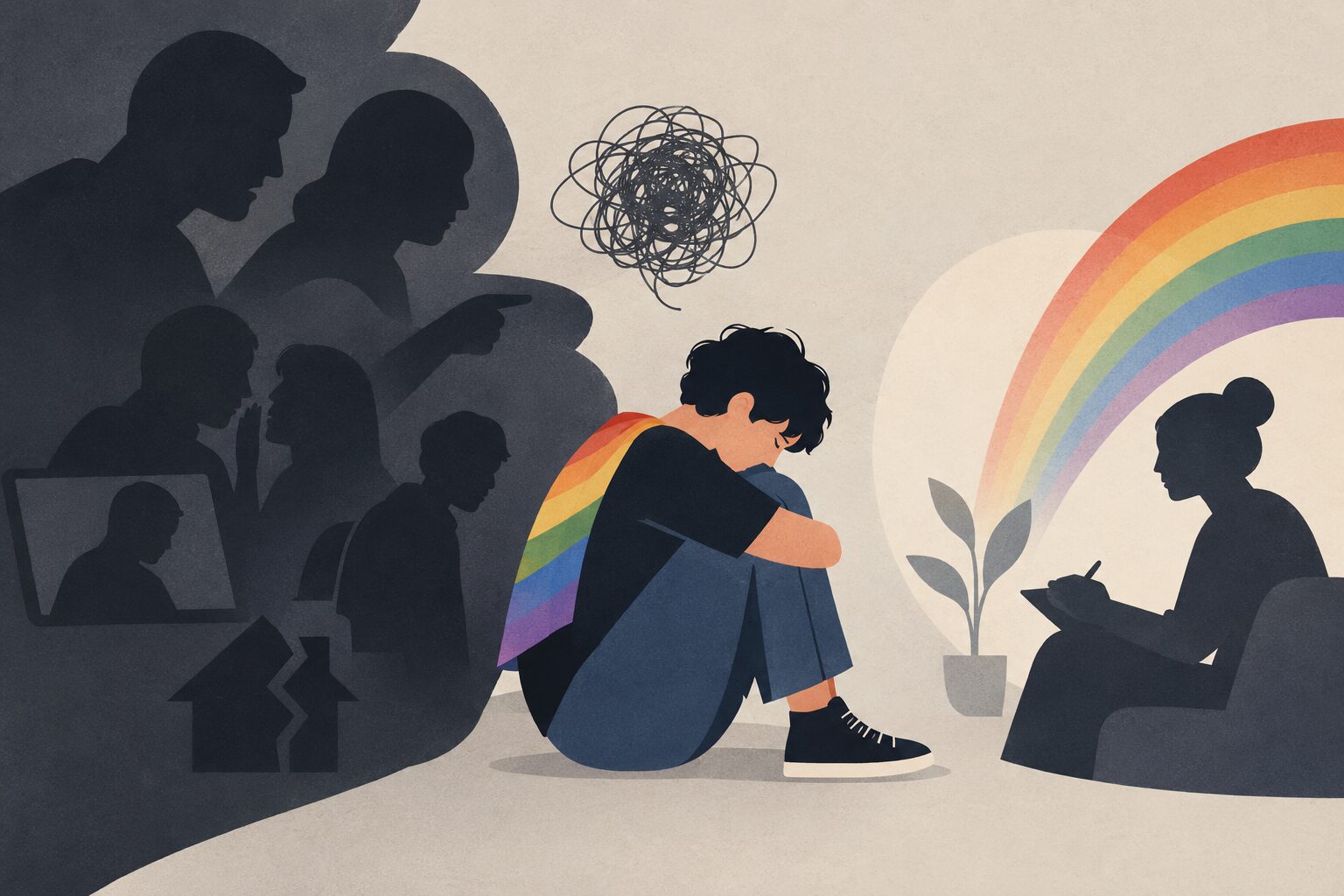
Even though legislation in most of these countries has made formal, positive steps under pressure or guidance from the international community and the processes of integration into the European Union, daily life for community members continues to be marked by stigma, homophobia, physical and psychological violence, and institutional reluctance to properly address these cases.
To show what the situation actually looks like in the countries of the region, the Center for Equality and Liberty of the LGBT Community, through a detailed publication, focuses precisely on these obstacles and lays out the main challenges community members face in several Balkan states. The report does not cover North Macedonia, which is why the local context, drawn from other data and reports on the situation of the LGBT+ community in the country, is included further below.
Kosovo: rights in the Constitution, discrimination in practice
In Kosovo, the Constitution guarantees equality before the law and prohibits discrimination, including on the basis of sexual orientation. For LGBT+ people, however, this protection does not always translate into safety, acceptance, and the freedom to live openly without fear of prejudice.
According to the publication, many community members continue to hide their identity from the rest of society, while the lack of adequate institutional support remains one of the main obstacles to exercising their rights.
Beyond the gap between laws and their enforcement, problems also appear in the legislation governing family life and the legal recognition of gender identity. The Law on Families limits marriage to people of the opposite sex, while the absence of bylaws regulating gender change in civil documents creates difficulties for transgender people.
Still, the publication also points to positive changes. The engagement of community organizations and international partners has helped raise awareness and strengthen cooperation with institutions such as the police, the prosecution, the judiciary, and various ministries. There is also greater support from parts of society and families, although this does not eliminate discrimination.
Progressive legislation hasn't fully changed reality in Albania
In Albania, the legal framework protecting LGBT+ people is described as relatively progressive. The publication notes, however, that this legal progress has not been matched by equivalent changes in the community's everyday life.
The main problem remains the gap between the rights recognized by law and their application in practice. Passing an anti-discrimination law does not guarantee that LGBT+ people will be treated without prejudice in schools, healthcare institutions, families, or public life.
One issue that needs more attention is the lack of ongoing documentation of the problems community members face. Without enough data on their experiences, it becomes harder to identify where concrete interventions are needed.
The publication raises questions about access to healthcare services, particularly for lesbian, bisexual, and transgender girls and women, as well as the situation of LGBT+ people in education. It also highlights the need to address school dropout caused by bullying, domestic violence, and the availability of support services for people who experience discrimination.
Another problem is how the media portrays the community. Discriminatory language and hate speech can reinforce prejudice, while the lack of responsible reporting can shift attention away from people's rights and experiences and toward stereotypes.
For this reason, community organizations continue to call for better enforcement of the law, monitoring of institutions, and services that respond to the concrete needs of LGBT+ people.
One example of support available in Albania is the "STREHA" shelter in Tirana, which serves LGBT+ people who have experienced discrimination or violence because of their sexual orientation or gender identity. According to the publication, it also offers support to people from Kosovo.
The challenges in Serbia
In Serbia, the rights of the LGBT+ community are included in state strategies and documents against discrimination. In 2014, the government adopted the Strategy against Discrimination and an accompanying action plan for preventing and protecting against discrimination, which also included the rights of LGBT+ people.
Even the organizing of pride parades has become part of public and political debate in the country. According to the publication, however, changes in how institutions approach these events have not always been accompanied by sufficient media attention or effective protection for the community.
One of the main problems is the weak enforcement of existing legislation. The publication points out that cases of violence against LGBT+ people, even against publicly known perpetrators, have not necessarily ended in court convictions.
This creates a gap between institutional commitments and the justice actually available to victims. When attacks are not investigated and effectively punished, affected people can lose trust in institutions, while perpetrators face no consequences that would prevent the violence from happening again.
The publication also highlights the problem of non-enforcement of Constitutional Court rulings. This shows that adopting strategies and having legal mechanisms in place is not enough if institutions fail to ensure that their own decisions and obligations are actually carried out.
In this context, LGBT+ activism in Serbia has become part of the political agenda, but that does not mean the community has automatically gained safety and equality in everyday life.
The challenge remains to ensure that protection is not limited to strategic documents or the organizing of public events, but translates into effective investigations, enforced court rulings, and real protection from violence and discrimination.
Lack of punishment fuels violence in Bosnia and Herzegovina
In Bosnia and Herzegovina, one of the main concerns identified in the publication is the insufficient institutional response to homophobic and transphobic violence.
According to the findings, when attacks are not properly investigated and punished, it creates the impression that violence against LGBT+ people can be tolerated. This not only leaves victims without justice, but can also encourage perpetrators to repeat their actions.
The publication stresses the importance of police and prosecutors identifying and treating these cases as hate-motivated crimes whenever the relevant criteria are met. This kind of response matters because it recognizes the discriminatory motive behind an attack and sends the message that violence based on sexual orientation or gender identity should not be tolerated.
Although there is cooperation between LGBT+ organizations and state institutions, the publication concludes that much work still remains to be done. The obstacles are not only about how institutions respond, but also about how difficult it is for society to accept the community as an equal part of itself.
In this sense, the challenge for Bosnia and Herzegovina lies not only in recognizing rights, but in creating an environment where those rights can actually be exercised without fear of attacks, exclusion, and humiliation.
As these findings show, the challenges facing the LGBT+ community in the Western Balkans reflect a shared regional struggle, the deep divide between legal standards adopted on paper and the patriarchal mindset that continues to dominate society.
While Kosovo, Albania, Serbia, and Bosnia and Herzegovina all seek closer ties with the European family, the region's true progress toward equality is measured not just by legal provisions, but by the level of safety, acceptance, and dignity offered to all citizens, regardless, in this case, of gender identity or sexual orientation.
North Macedonia
Although CEL's report does not cover North Macedonia, the situation of the LGBT+ community in the country does not differ much from that of the neighboring countries included in the study. Data from the "Govor na omraza" platform shows that hate speech has continued this year as well, with 15 cases recorded through June, including cases linked to the announcement of the Pride Parade, while 76 cases of hate speech based on sexual orientation and gender identity were recorded in 2025 alone. Since 2012, the total number of such cases has reached 1,066.
Komisioni për Parandalimin dhe Mbrojtjen nga Diskriminimi (KPMD) ka trajtuar gjatë vitit 2025 gjithsej 559 lëndë për mbrojtje nga diskriminimi, prej të cilave 10% kishin si bazë të raportuar gjininë dhe 8% identitetin gjinor. Në 56 prej këtyre rasteve, Komisioni ka konstatuar diskriminim, duke përfshirë raste të diskriminimit të drejtpërdrejtë në fushën e qasjes në punësim, çka tregon se problemi nuk kufizohet vetëm në hapësirën publike dhe atë online.
The Commission for Prevention and Protection against Discrimination (KPMD) handled a total of 559 discrimination protection cases in 2025, of which 10% were reported on the basis of gender and 8% on the basis of gender identity. In 56 of these cases, the Commission established that discrimination had occurred, including cases of direct discrimination in access to employment, showing that the problem is not limited to the public space or the internet alone.
This publication was produced within the framework of the project Queer and Present: Media, Rights and Safety for LGBTIQ+ persons in Pollog, which is implemented as part of the broader regional project Together for LGBTQI+ Equality, implemented by the Centre for Civic Education (CCE) in partnership with ERA – LGBTI Equal Rights Association for the Western Balkans and Turkey, Queer Montenegro, Queer Center Skopje, Tuzla Open Center, Open Mind Spectrum Albania (OMSA), and the Center for Social Group Development from Kosovo. The programme is funded by the European Union.