Lea Ypi received the "BookStar 2026" award in Skopje, and the hall was filled with people from different ethnic communities, brought together around the same work. A few weeks later, eight Albanian and Macedonian poets sat on the same stage for "Between Two Verses." At the center of both initiatives were two women, Lea Ypi and Arlinda Baftiu as co-organizer.
"Free," was the book for which the Albanian writer and philosopher Lea Ypi was honored. She treats freedom not only as an individual right, but also as a moral responsibility and as a question of how societies themselves are built.
Art as a "connecting bridge" between communities
Ypi's presence in Skopje brought something else to the surface. The possibility that culture can open spaces where people meet beyond the identities that usually divide them.
In a society where Albanians and Macedonians often live in what could be described as two parallel realities, art remains one of the few places where these realities intersect.
"It's important to me, at least, that this recognition in this environment of culture and literature is a recognition that makes me think there are so many spaces where we can cooperate beyond nationalism, beyond ideological limits, and where we can fight for freedom and integrity," Lea Ypi said in an interview with Portalb.mk.
"Recognizing collective freedom, recognizing identity, language, the things that bring us together, is not a threat to the other. In fact, it's a wealth for a society," she added.
Her statement connects directly to the theme of the book "Free," where freedom is treated as a responsibility shared between the individual and society.
Eight poets, two languages, one stage
If in Skopje people gathered around the book of an Albanian author, another recent initiative brought this unity even closer. "Between Two Verses" was a poetry reading where eight poets, Albanian and Macedonian, met on the same stage.
Poetry, in this case, wasn't just what was being read. It was also the reason people gathered in the same hall.
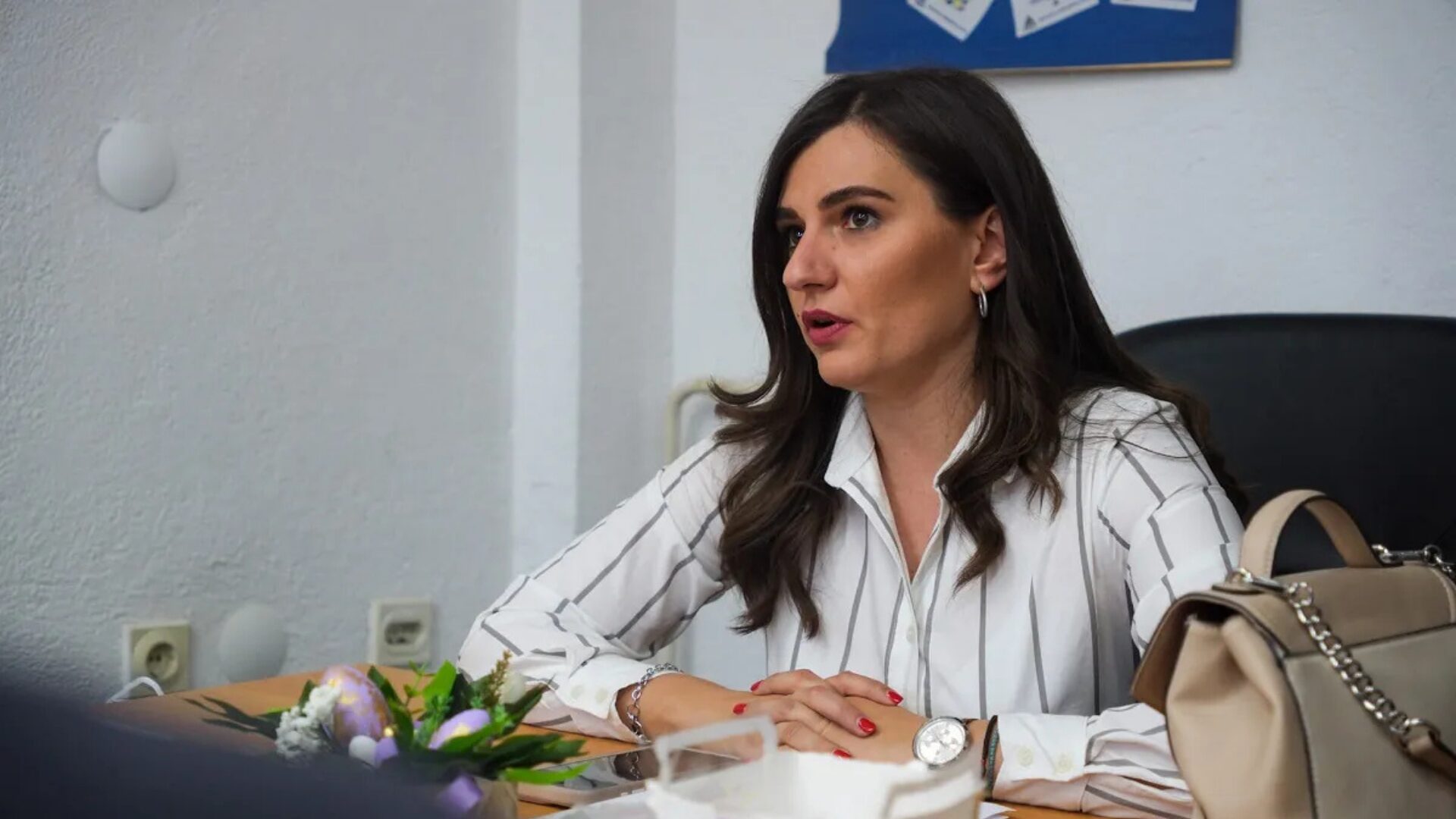
Arlinda Baftiu, poet and journalist, was part of organizing the event. According to her, initiatives like this play a direct role in reducing the distance between communities.
"Events like this always narrow the gap of alienation from the other. Organizations like this have consistently proven important in fostering better understanding, cultural dialogue, and improving communication among young people who live within a shared space," says Baftiu.
For her, this isn't just a cultural matter, but a form of diplomacy, all the more necessary in a society where other sectors often fail to build stable bridges.
"Art is a universal language, and it's only when we're in joint initiatives like this that we realize we share the same concerns and questions," she says.
According to Baftiu, initiatives like this used to be more frequent, mainly as projects supported by the international community.
"Today they need to be present and part of everyday culture. Cultural scenes still remain divided as if by a knife, and this is a problem in a society that needs to coexist," she says.
Her words show that, nonetheless, the distance between communities in the field of culture remains, still, an unresolved issue.
Getting to know one another through creativity
Andrej Mediq, poet and literature professor, believes that the meeting of young artists isn't just a cultural exchange, but a way of getting to know the other through creativity.
"Literature, like all culture in general, has great potential to bring young artists from different communities closer together. Cultural initiatives help us listen to one another more, get to know the art we create and, in general, get to know each other better as young, active artists," says Mediq.
This was also one of the reasons behind organizing "Between Two Verses."
"The event had good visibility, a beautiful atmosphere, and a large turnout. It's important because it represents a step forward toward jointly organizing events and mutual understanding," he says.
According to Mediq, their goals don't end with this event.
"Our idea is to organize as many events as possible involving artists from all communities," he says.
North Macedonia isn't without examples of cultural cooperation. Though not large in number, there are festivals and literary events that have, for years, brought together authors, poets, and artists from different communities.
Ditët e Naimit, the Skopje Poetry Festival, Dobri Gosti, and the Struga Poetry Evenings are among the spaces where literature transcends language and ethnic background, and creators meet around what they have in common: art.