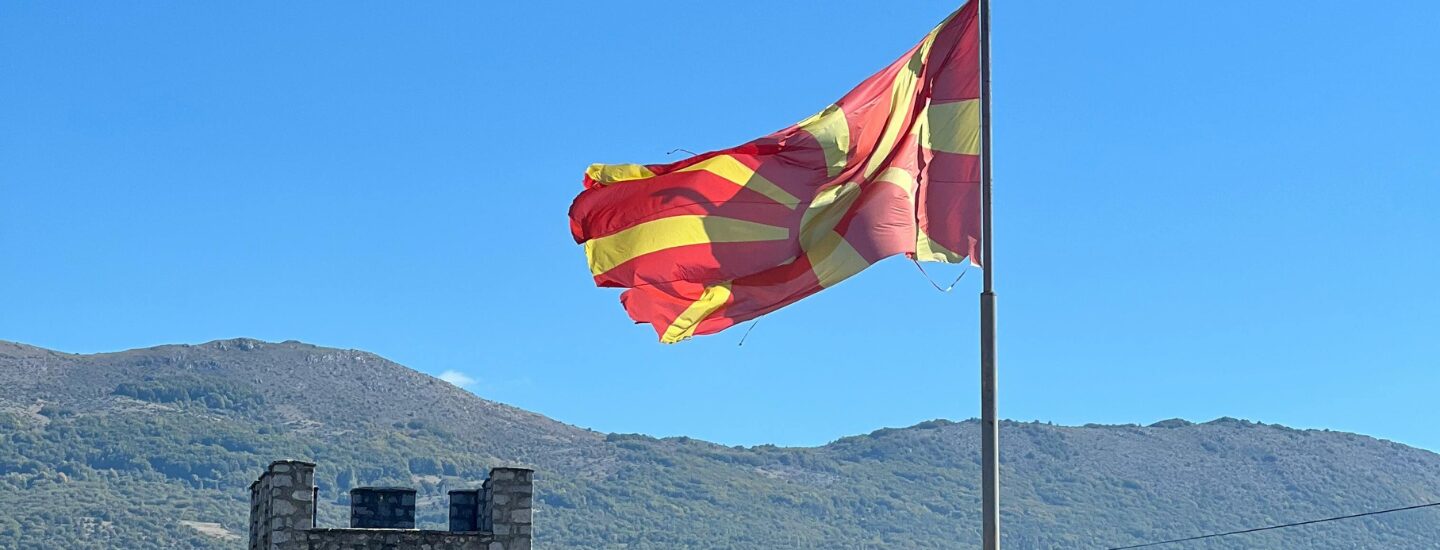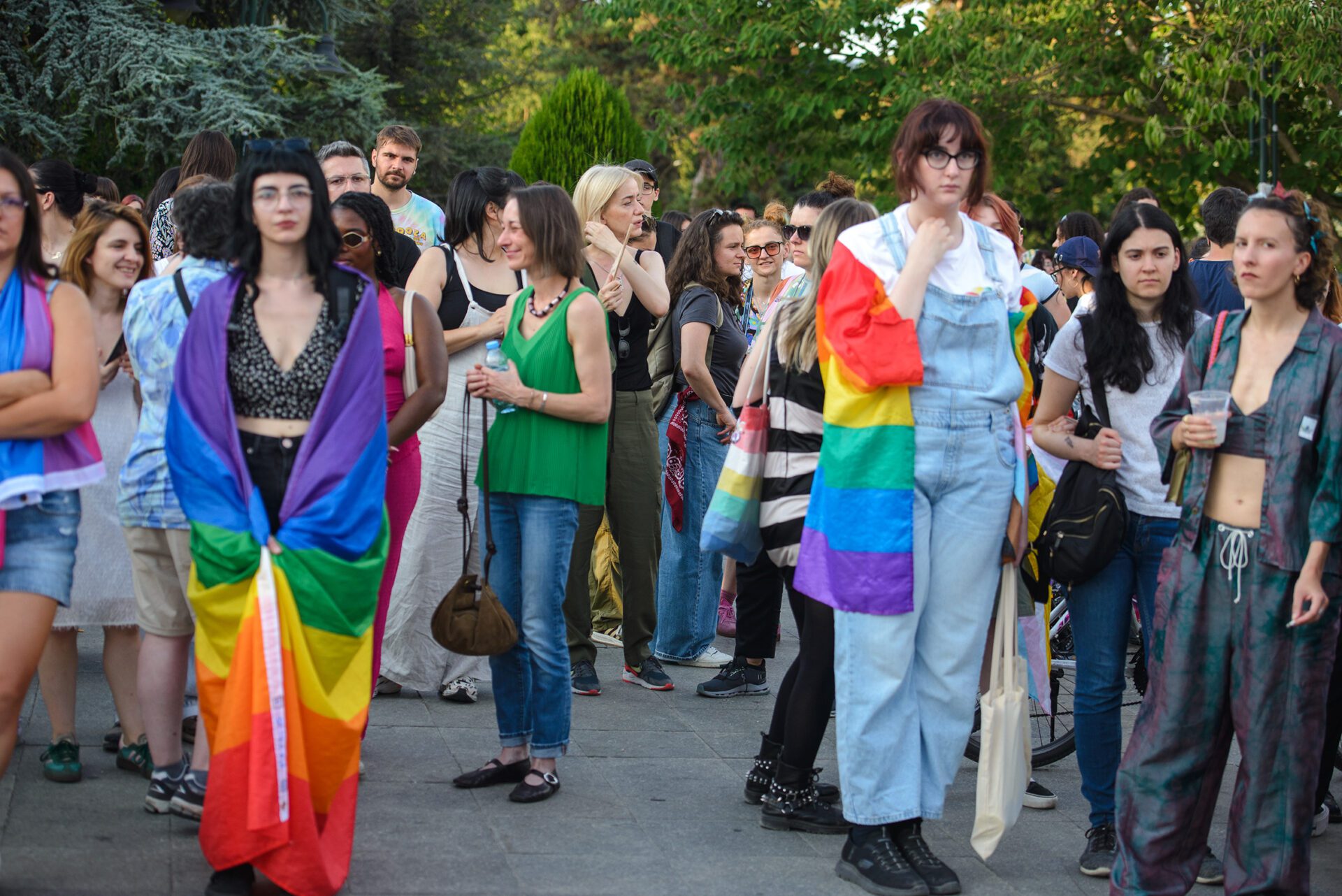
Pride was held on June 20 in Skopje, under the slogan "Let everyone know." Since 2019, members of the LGBTI+ community and their supporters have marched through the streets of the capital, demanding equality and drawing attention to the problems they face.
But the community's challenges are not limited to a single day of protest or to the space of the capital. Outside Skopje, organizations, safe spaces and support networks are lacking, while many people continue to hide their identity for fear of discrimination, violence or consequences within their family and at work.
Data from the European Union Agency for Fundamental Rights show that only 21 percent of LGBTIQ+ people surveyed in North Macedonia can speak openly about their identity, while 74 percent avoid public displays of affection out of fear of harassment. At the same time, 43 percent avoid certain areas to reduce the risk of attack.
Both international and domestic reports also document problems with the enforcement of rights, hate speech and the response of institutions.
Mollëkuqja spoke with several activists from Skopje Pride about these issues.
Outside Skopje, both spaces and the ability to feel safe are missing
The concentration of LGBT+ activism in Skopje, according to the activists, should not be seen as the result of a deliberate neglect of other cities. It is part of a broader problem of centralization in the country, where most organizations, institutions, media outlets and public events are concentrated in the capital.
This has direct consequences for the community outside Skopje.
In smaller towns there are far fewer organizations and safe spaces where LGBTI+ people can meet or seek help.
“We wouldn't say the other cities are deliberately neglected,"the activists say, linking this situation to a general lack of structures and resources outside the capital.
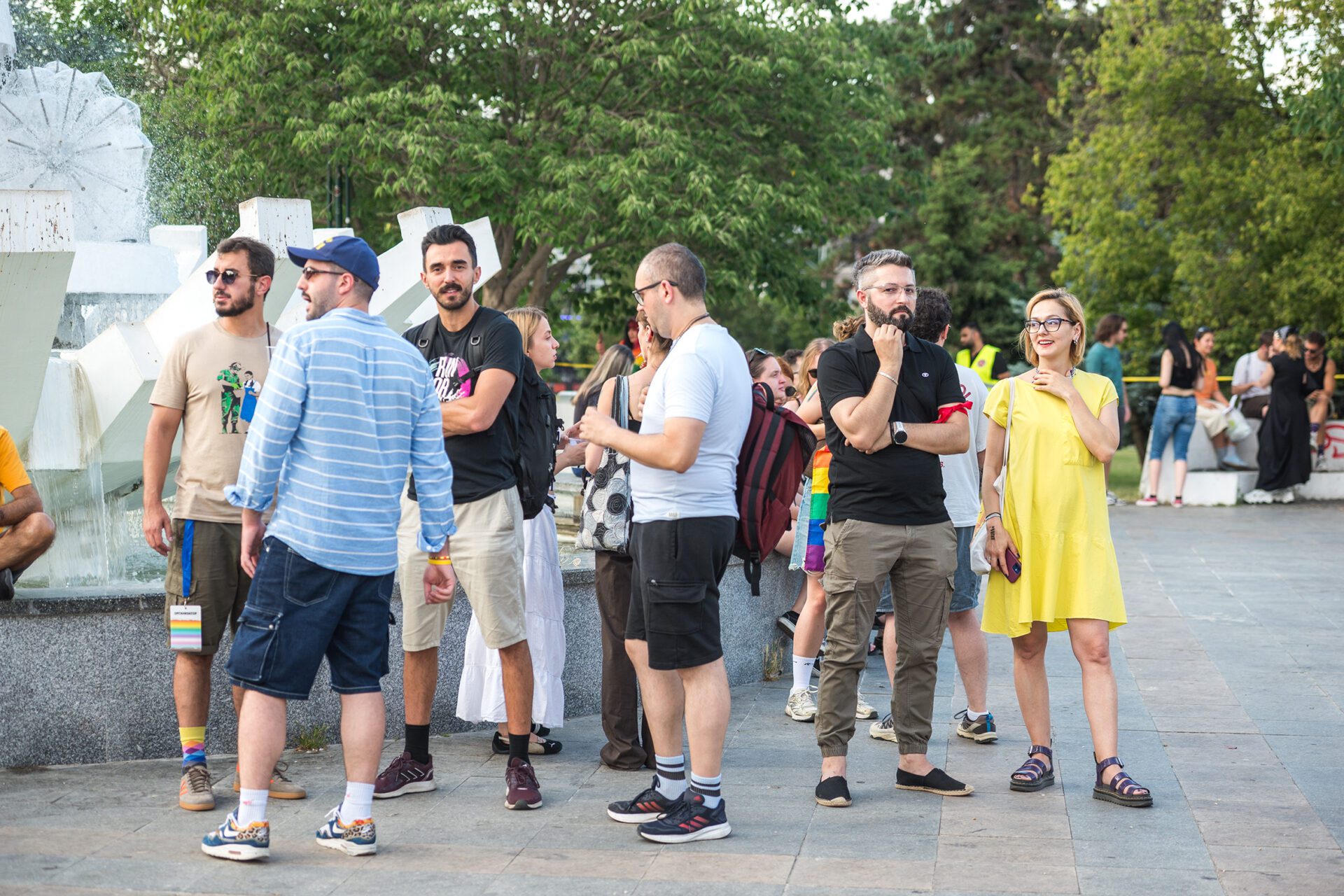
In recent years, they say, some organizations and initiatives have faced a lack of funding, reduced activities or even shut down entirely. Under these conditions, building new, long term structures in other cities becomes even harder.
Still, this does not mean the need is any smaller.
“It's probably even greater than in Skopje, only much less visible,"they point out.
A lack of visibility is not a lack of courage
In a small town, speaking openly about sexual orientation or gender identity can carry more direct consequences. People know one another, information spreads quickly, and coming out publicly can affect a person's relationships with their family, their workplace or the community they live in.
In Skopje, by contrast, there is greater anonymity and more opportunity to build a network of people one feels safe with.
That is why, the activists say, a lack of visibility should not be read as a lack of desire for change.
“Sometimes invisibility is a way to protect yourself",they say.
This is especially important for young people living in other cities who have no community or support network around them. According to the activists, no one person should be expected to carry the full weight of activism in an environment that still cannot guarantee their safety.
Legal progress is not the same as change in everyday life
The activists say there has been progress in recent years. LGBT+ issues are more visible in public debate, and the community has a greater presence in public spaces.
But they draw a clear line between visibility and equality.
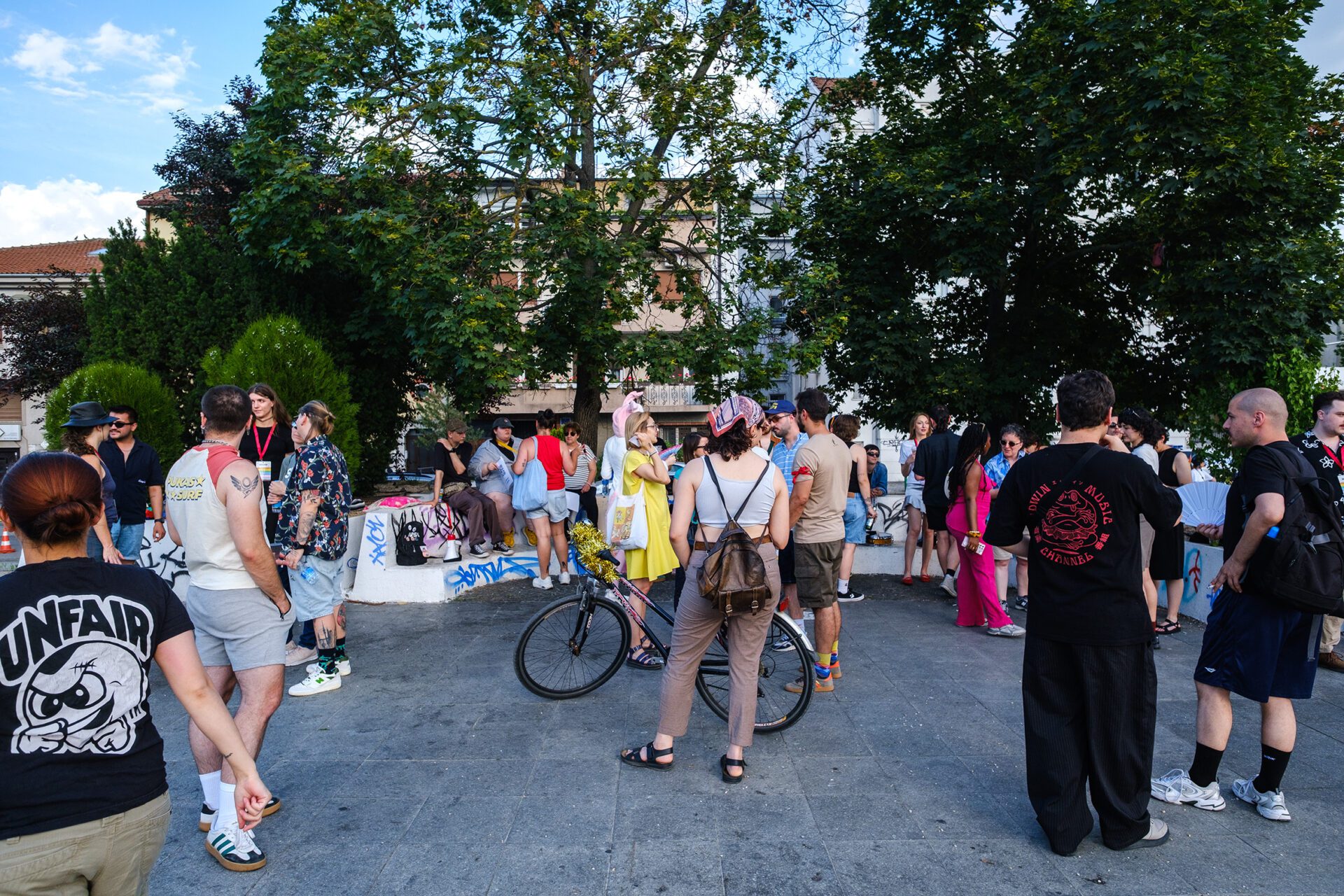
A person can have legal protection and still hesitate to report discrimination because they don't believe the institutions will protect them.
“Visibility is not the same as equality. We can have a Pride march once a year, while an LGBT+ person spends the other 364 days afraid to hold their partner's hand on the street,"the activists say.
According to them, real change will be felt once LGBTI+ people no longer have to constantly calculate where they can be safe, who they can speak to and whether doing so will have consequences.
Institutions react to incidents instead of preventing them
One of the problems the activists point to is the way institutions respond to discrimination and violence.
Often, they say, the response only comes after a case becomes public. Organizations react, the media ask questions, the public applies pressure, and only then do institutions take steps.
“One of the biggest problems is that far too often we see reaction instead of preventionthe activists say.
Human rights, they say, should not work this way. Citizens need to know that if they report discrimination, a threat or violence, someone will take it seriously and act in time.
This, they stress, applies to the police, the prosecution, healthcare, education and social services.
“It's especially important that people working in the police, the prosecution, healthcare, education and social services know how to act professionally toward LGBT+ people,"the activists say.
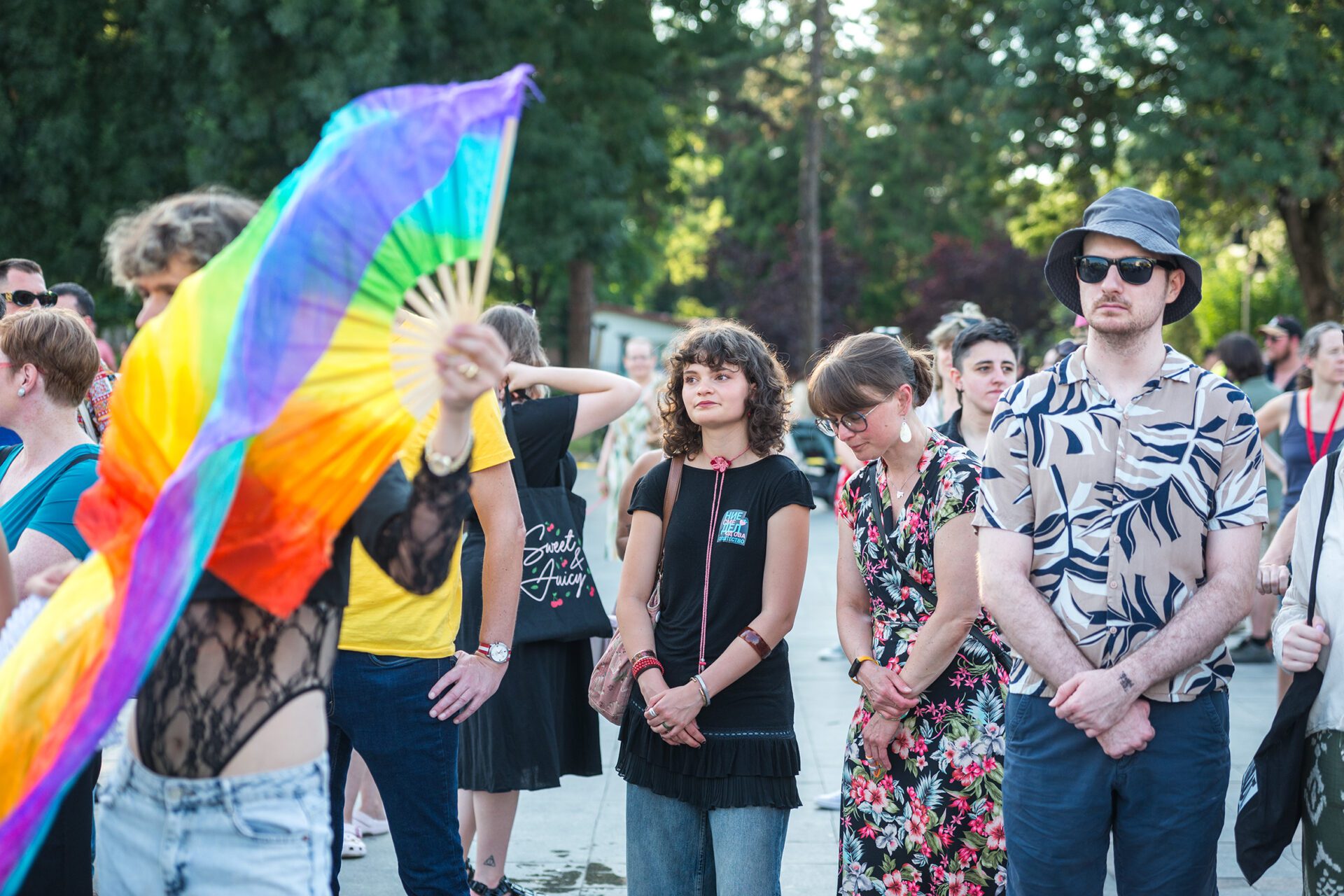
They see this as one of the main gaps between what the law provides and what happens in practice.
"Civil society organizations shouldn't constantly have to remind institutions what their job is," they stress.
Another challenge, reaching people who don't yet support equality
LGBT+ activism also faces another question, how much it actually manages to communicate with people who are not yet convinced of equality.
The activists admit it's far easier to talk with people who already support the community. It's much harder to reach someone who has never knowingly met an LGBTI+ person and whose entire picture of the community has been built on stereotypes and prejudice.
For this reason, they believe there should be more talk about the people themselves, and less reliance solely on the language of laws, strategies and policies.
“Behind the acronym LGBT+ are people who go to work, study, take care of their parents, fall in love, break up, and have plans and problems just like everyone else,"the activists say.
Society's attitudes, they say, will not change overnight. But an important part of activism is creating spaces where people can meet and talk to one another, rather than only seeing each other through prejudice.
North Macedonia, according to the most recent ILGA Europe report, is ranked near the bottom of the list when it comes to the rights of the LGBTI community. According to that report, for 2025 the country scored 29.26 percent and ranked 31st out of 49 countries in terms of the legal and political standing of LGBTI people, covering areas such as equality, hate speech, legal gender recognition and civil society space.
This publication was produced within the framework of the project Queer and Present: Media, Rights and Safety for LGBTIQ+ persons in Pollog, which is implemented as part of the broader regional project Together for LGBTQI+ Equality, implemented by the Centre for Civic Education (CCE) in partnership with ERA – LGBTI Equal Rights Association for the Western Balkans and Turkey, Queer Montenegro, Queer Center Skopje, Tuzla Open Center, Open Mind Spectrum Albania (OMSA), and the Center for Social Group Development from Kosovo. The programme is funded by the European Union.

The contents of this publication are the sole responsibility of the Center for Equal Opportunities “Mollekuqja” and do not necessarily reflect the views of the European Union, CCE, or the project partners.