Coexistence among communities in North Macedonia remains one of the most present topics in public debate, but the question often left aside is how much it is actually experienced in everyday life. Ethnic and gender differences, along with other less visible forms of inequality tied to how someone lives or expresses themselves, continue to shape the way people learn, socialize, work, and build relationships with one another. For young people, who are meant to be the generation that moves beyond the divisions of the past, this often means growing up in separated environments, with few opportunities to naturally get to know peers who are different from themselves, whether from other communities or simply through different life experiences.
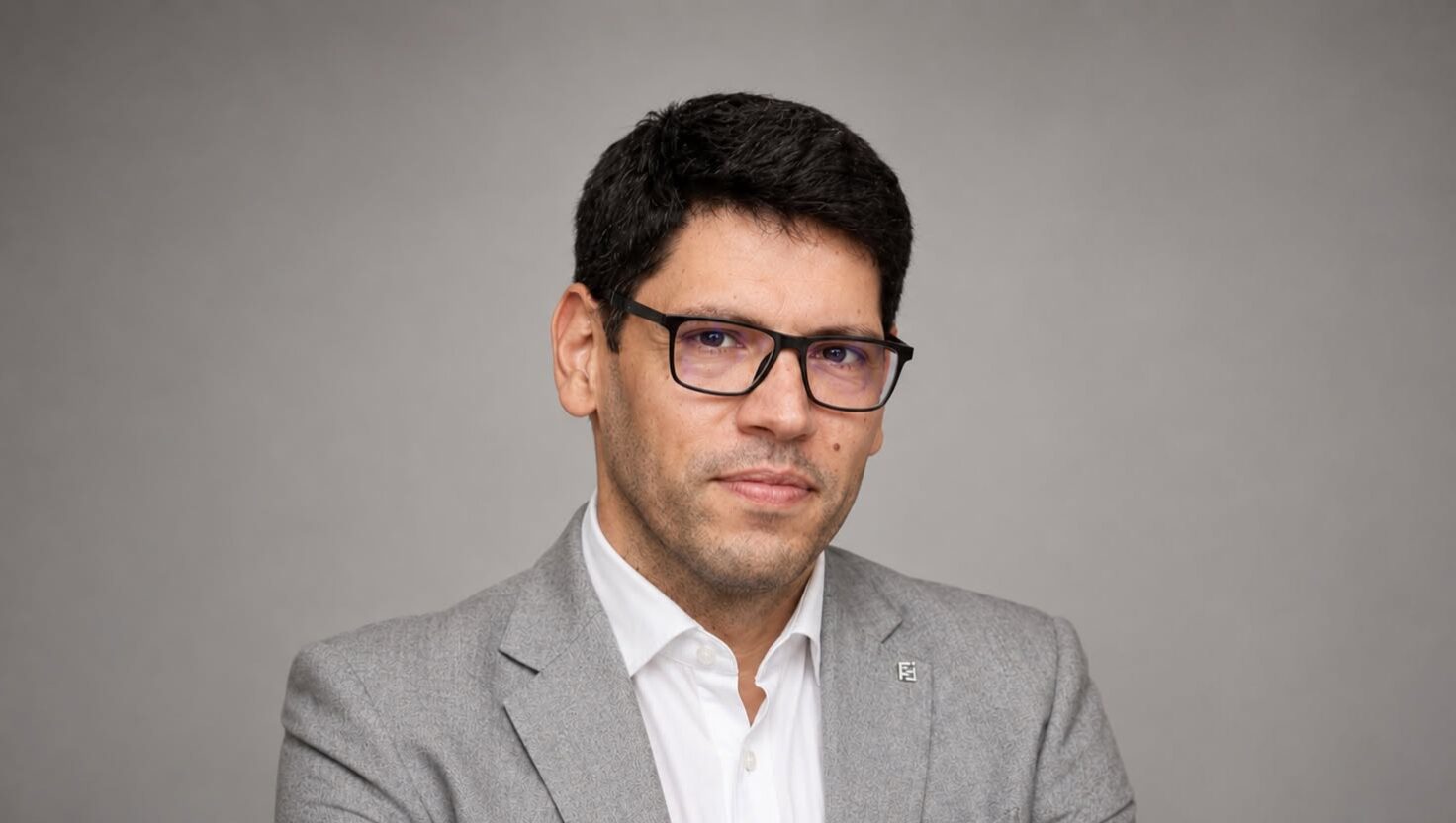
On these issues, Mollëkuqja spoke with the Minister for Community Relations, Agon Ferati, about coexistence between communities, the role of young people, divisions in education, the influence of politics, and the responsibility of institutions in building a society where differences don't turn into barriers.
There's a lot of talk about coexistence, but how much do citizens, young people especially, actually feel it in their daily lives?
Yes, it's true that there's a lot of talk about coexistence, and I think that's a good thing for society. The fact that today we talk more about respect, understanding, and living together is a sign that we've progressed as a society. But now we need to take the next step: to actually live coexistence, not just mention it.
Because coexistence isn't just about living next to someone who's different from you. Coexistence means sitting down with them at the same table, working with them, creating something together, and understanding that difference isn't a threat. It can be an asset.
Young people still face barriers that sometimes aren't visible, but are real. From segregation in schools to the lack of spaces where they can meet and collaborate. This is exactly where I see the Ministry's role: not to tell people how they should live, but to create opportunities for them to meet, get to know one another, and build trust. I want to say something very important here: we must not let young people live with the fears and conflicts of previous generations. Many of the divisions we keep discussing today were created in a different time, in a different reality, with a different mindset.
Today's young people have the right to write their own history. We shouldn't map out their future using the conflicts of the past. Let's listen to young people when they talk about education, technology, jobs, Europe, entrepreneurship, culture, and the opportunities they want to build together. I believe the state shouldn't tell young people who to love and who not to. The state should give them the opportunity to meet. Because when people meet, prejudices start to fall. When they collaborate, trust is born. And when they create together, a new civic identity is born, one that's bigger than our divisions.
Do you think politics and political parties still stoke ethnic divisions when it's politically convenient for them?
Yes, unfortunately, politics and political parties still try to stoke ethnic divisions when it serves them politically. But I think that's already a worn-out playbook. Citizens understand, far better than before, that behind this rhetoric often lies a poverty of ideas and a lack of any real vision for the future.
In fact, I think we need to say this very clearly: radical, ethnic rhetoric is increasingly becoming a recipe for electoral failure. We're witnessing that parties trying to mobilize voters through fear, conflict, and division have a much harder time advancing politically than moderate parties offering concrete solutions. Today's citizen doesn't vote purely on the basis of who "we" are and who "they" are. They ask what you've done, what you're offering, and what kind of future you're guaranteeing them and the generations that come after.
So ethnic division might work as a tool to win a few votes in the short term, but it's no longer a strategy for winning the trust of the majority of citizens.
That's why, as Minister for Community Relations, I believe we also need to change the very language of politics: from a politics of division to a politics of cooperation. Because you can win an argument by inflaming divisions, but you can't win elections in the long run by offering citizens nothing but fear and conflict. Today's citizen wants results, and when they don't get them, they punish you at the ballot box.
How effective, in practice, are the Ministry's policies and projects aimed at bringing communities closer together, and do you have data showing concrete results?
I think the effectiveness of our policies should be judged exactly by what I said earlier: turning coexistence from a concept we merely mention into something we actually live every day. We have projects that bring together young people from different communities, that create joint activities and spaces where they can meet, get to know each other, and collaborate.
But our ambition is bigger than that. I don't want the Ministry's success to be measured by how many projects we've funded, but by how much change we've actually created. That's why we want concrete indicators: how many young people were involved, how many communities collaborated, how many joint initiatives were created, and above all, whether trust and understanding between them have grown.
Because in the end, the most important statistic isn't how many activities we've organized. It's whether a young person who yesterday saw someone else as "other" now sees them as a friend, a colleague, or a partner to build something with. That's where real change begins, and that's where the success of the Ministry should be measured.
Why do young people, in so many cases, still grow up and get educated in ethnically divided environments? Is this an institutional failure?
Yes, I think ethnic division in education is one of the challenges we need to openly acknowledge. It wouldn't be right to deny it, but it also wouldn't be right to attribute it to a single institution or a single government. This is an issue that has built up over years and is tied to many factors, starting with infrastructure and the way education is organized, all the way to the mindset, prejudices, and fears we often inherit from previous generations.
But that doesn't mean institutions have no responsibility. On the contrary, it's our responsibility to create opportunities to reduce these barriers. We can't ask young people to build relationships with one another if the state doesn't create spaces where they can meet, communicate, and work together.
And this is where I believe we need to change our approach. It's not enough to tell young people to "coexist." We need to give them reasons to be together. To study together, to take part in sports, technology, culture, and entrepreneurship, to build projects and solve shared problems together.
What responsibility would you bear as minister if, years from now, young Albanians, Macedonians, and other communities are still living more in parallel than together?
I see my responsibility very clearly: I want to be able to say, by the end of my term, that we've built more bridges, more shared spaces, and more opportunities for citizens to meet, get to know each other, collaborate, and build trust with one another. One concrete step in this direction was marking the 25th anniversary of the Ohrid Framework Agreement. For the first time, we decided to take this event outside the traditional single party, single ethnic framework, out of closed off spaces, and bring it into the heart of Skopje, under the open sky, next to the Stone Bridge. We did it with an inclusive state protocol, where every community could feel part of a shared event, and we turned art and music into a language that doesn't divide people, but brings them closer.
We also tried to create equal space for all communities in the discussion panels. It wasn't easy. We ran into prejudice, and some public figures even refused to take part. To me, that was proof of how much work still lies ahead of us, but also one more reason not to back down.
Because if people are still hesitant to sit down at the same table, our role is to build those tables. We can't erase prejudice with a single statement, but we can create opportunities for people to meet, listen to one another, and discover that they have far more in common than they think. In the end, that's the responsibility I want to hold onto: not just talking about coexistence, but creating the conditions for a new generation to actually live it.