Young people in North Macedonia today are more open than ever to socializing and cooperating with peers from other ethnic communities, but this generation's real potential to build a more integrated and equal society is still far from being fully realized.
This is especially true for young women and girls, who often face a double divide, ethnic and gendered, when it comes to spaces where they can socialize freely.
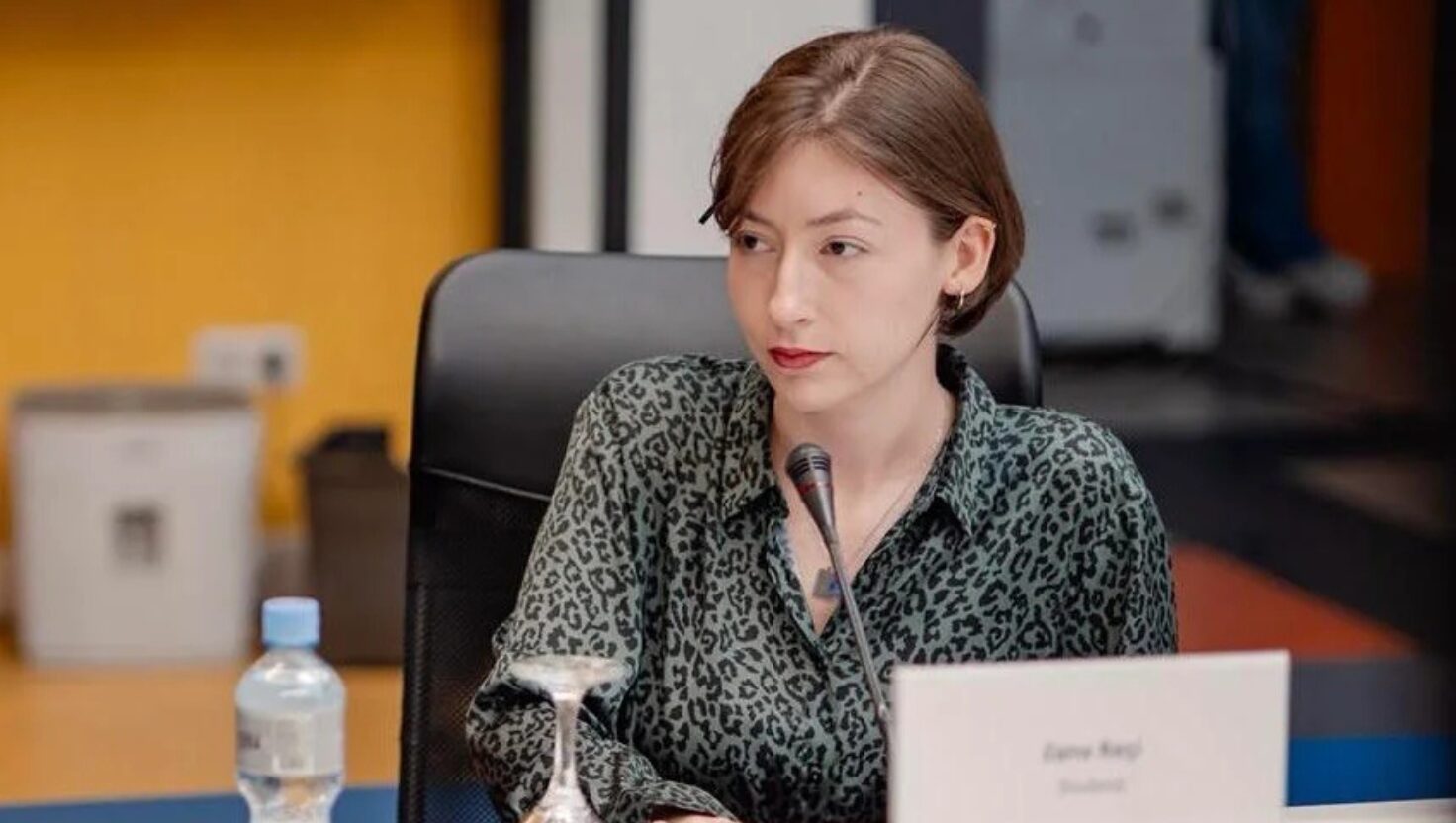
Sociologist Zana Reçi, in an open and in-depth conversation with Mollëkuqja, points out that family, school, and social circles continue to play a decisive and powerful role in shaping how young people today perceive "the other," while ethnic divisions within the education system, combined with the lack of shared spaces where everyone could feel equally welcome, make it considerably harder to build natural and lasting relationships between different communities.
Still, despite these structural obstacles, she sees real, untapped potential in everyday friendships, joint activities, and young people's active engagement, elements that, in her view, can directly challenge inherited stereotypes and build lasting bridges between communities.
According to her, real investment in cultural and social centers, in youth organizations, and in what sociology calls "third spaces," meaning places where young people can meet outside of school, family, or work, would be an important step toward a closer and more equal coexistence for everyone.
Are young people today more open to coexisting and socializing with peers from other ethnicities?
Yes, young people today are more sociable with one another than previous generations, but the expectations that existed for Gen Z haven't been fully realized. Of course, the direct tension once tied to political and military conflicts no longer exists, yet closeness and connection between ethnic communities haven't improved to the extent one might expect. While state policies aim to promote multiculturalism and coexistence, in practice we see more indifference toward "the other," except in cases where contact is unavoidable.
Young people in North Macedonia, especially in areas with a pronounced ethnic mix, still tend to stay within their own circle and among "their own people." Even though this is a modern generation, in many ways it continues to be more traditional and conservative than one might expect.
How much do environment, family, school, neighborhood, or social media influence the way we see other ethnicities?
Family and social circles make up the first space of socialization, where the individual learns about "the other," about what is considered foreign, and begins to form a collective identity alongside a personal one. In this environment, one learns to distinguish one's own group from other groups and forms perceptions of ethnic and cultural differences. At school, this process continues. Language barriers, ethnic division, and the lack of inclusive curricula continue to make integration between ethnicities harder. The fact that different ethnic groups are part of the same education system doesn't necessarily mean that genuine multicultural integration takes place between them.
Social media has a multiplied impact on this process. Besides helping with the problem of isolation by making it easier for young people to have contact with different ethnicities, there's also the opposite effect. For example, r/mkd is a community on the Reddit platform where many young Macedonians discuss political, social, and everyday topics. In such discussions, xenophobic comments or attitudes toward Albanians and Roma occasionally appear, presented in a normalized way or disguised as humor. This is an example of how online spaces can constantly expose young people to a certain perspective on other groups and, over time, contribute to the absorption and reproduction of these ideas.
Is the problem that we don't want to get to know one another, or simply that we don't have enough opportunities to do so?
It's more the latter. An analysis conducted by the University of Tetovo suggests that ethnic tensions among young people are fueled by many factors, including segregation in schools. As mentioned, school and family are the foundation where our collective identity is formed.
When, during this period, young people see members of other ethnicities physically separated, whether in different schools or in separate sections of the same school, this reinforces the idea of "the other" and makes it harder to build natural connections between communities.
What are the spaces where young people can meet naturally and build relationships beyond ethnic divisions, what needs to be done in this regard?
There's a lack of what are called "third spaces," meaning places outside of family, school, or work, such as social clubs, hangout spaces, cultural centers, play areas, and other activities where young people can interact with one another. The greater the distance between communities, the more room is created for prejudice. For many young people, shopping centers, the street, or cafés are almost the only "third spaces" available, if they're not part of a sports club.
But since these are unstructured spaces, they don't necessarily create real opportunities for young people from different ethnicities to get to know each other and socialize. Investment in the NGO sector, in artistic, cultural, and social centers, would be a concrete step toward what our institutions constantly claim to be aiming for: multiculturalism.
How much can friendships and cooperation among young people influence the breaking down of ethnic prejudices?
Friendship and cooperation among young people play a powerful role in breaking down ethnic prejudices. One of the main mechanisms through which conservative attitudes toward other groups are preserved is social isolation. The less contact there is between communities, the easier it becomes for negative perceptions of "the other" to form, who then starts being seen not as an individual, but as a caricature.
From a sociological standpoint, direct contact and cooperation between groups can challenge these perceptions. Friendships, joint activities in schools, trips, social clubs, and cultural exchanges with young people from other countries give young people the chance to interact with one another. Through these experiences, they can question and "unlearn" the stereotypes they absorbed during socialization, coming to see the other person as an individual rather than merely as a representative of an ethnic group.